
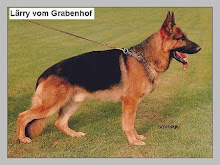
Dogs having a natural instinct towards being "pack" animals. Just like their ancestors in which they came from, the wolf, dogs think in terms of partnerships and teamwork when it comes to certain activities. Similar to the way a sports team will work together in order to accomplish the combined goal of winning, your dog looks towards you and the rest of the family as his "team" and counts on you all to help him survive, learn the rules of the house, and condition his behavior.
And like a winning team, there are certain characteristics that must be adhered to and provided by all members of the family, including your dog. Such examples of winning characteristics are disciplined structure, operation among everyone in your dog, and most important, respect between your dog's "pack". Without these items, there would be chaos and very little way in which your dog can recognize who is in charge and leading his team.
Dogs and puppies need this understanding of leadership and who is to play that role in order to be happy and feel a sense of belonging. Regardless of who is considered the leader in your family, it doesn't matter to your dog, so long as there is one then your pet will be happy and feel a sense of security.
For those family households that have more than one member living inside the home, your dog will recognize a specific hierarchy that develops in time. For example, in my home I have my wife and my daughter that all coexist with the family pet. My dog recognizes his role as the bottom of the leadership chain, and he is quite happy with that. He understands that all of us play a more dominant role in the "pack" than he does. Because there is structure and he is trained to know who is in charge, even though there are multiple members of the family, his sense of security and well-being is guaranteed.
Most dog behavior problems stem from lack of rules and discipline in the house
At this point you have learned that all dogs need to have rules and boundaries firmly set in the household in order for them to be happy. It is the same way with children. Without mommy or daddy to set the rules and enforce those rules, kids typically end up with with an enormous amount of personal behavior problems.
If your dog does not recognize the family as a team and has no sense of who is in charge, his behavior problems can be a nightmare. It is your job to start creating a social order in your house immediately. You must learn to communicate with your dog by reading his body language and picking up on his sense of who's in charge.
And the job will be a lot easier if you can get all members of your family on the same playing field. They must all agree with how your dog should be treated. This will help tremendously so that your time is not wasted as you work hard to create a pack within the family, which will help your dog become a happy, well-trained family pet.
Showing posts with label pet training. Show all posts
Showing posts with label pet training. Show all posts
Tuesday, July 7, 2009

Monday, June 29, 2009
Biking With Your Dog – How To Have Safe Fun By Biking With Your Dog
Most dogs love to run, and some breeds are physically bred for speed and endurance, such as the Greyhound, who can run up to 45 mph. Other dogs that are built for speed are the Afghan Hound and the Saluki. But regardless of the breed or the size of your dog, expect that he can enjoy a good jog in the park, or even a quick run around the block. And if riding a bicycle is something that you enjoy doing, taking your dog with you (depending on his size and physical condition) is a wonderful way to spend time with him while getting and good workout yourself at the same time.
Bike Rides Can Be Safe
If you usually ride your bicycle around town or in your neighborhood, it won't be difficult for your dog to keep up with you. The safest way for riding a bike with your dog in this type of location is to keep him on a lead. There are products out there, such as the Springer and the Walkiedog, that keeps both your hands on the handlebars while giving you the ability to keep your dog on leash at the same time. These two products can be easily mounted under the bike seat and offer protection and comfort for both you and your dog.
Problem With Distraction?
Your dog will less likely get bothered by distractions if he knows how to heel. Therefore, practice his obedience skills like “Off”, and “Leave it” before you begin your ride. Also, make sure you bring along his favorite snack. Whenever he comes across a distraction, tell him to “Leave it” and then give him a snack. It'll be easier for him to pay attention to you, above anything else, because he knows that you brought along his favorite snack. Also do this exercise before you ride.
Don't Forget The Basic Commands
If you like to ride along trails, bringing your dog with is one of the best treats you can give him. With a little basic training, your dog can be the best companion for a mountain biker.
In fact, there are a lot of mountain biking spots that you and your buddy can go where dogs can run free without a leash, such as along the trails of a National Forest, as long as you can keep your dog under your control and under voice command. Therefore, practice the Heel and the Come command until you are confident that your dog is able to obey you 100% of the time.
Bike Rides Can Be Safe
If you usually ride your bicycle around town or in your neighborhood, it won't be difficult for your dog to keep up with you. The safest way for riding a bike with your dog in this type of location is to keep him on a lead. There are products out there, such as the Springer and the Walkiedog, that keeps both your hands on the handlebars while giving you the ability to keep your dog on leash at the same time. These two products can be easily mounted under the bike seat and offer protection and comfort for both you and your dog.
Problem With Distraction?
Your dog will less likely get bothered by distractions if he knows how to heel. Therefore, practice his obedience skills like “Off”, and “Leave it” before you begin your ride. Also, make sure you bring along his favorite snack. Whenever he comes across a distraction, tell him to “Leave it” and then give him a snack. It'll be easier for him to pay attention to you, above anything else, because he knows that you brought along his favorite snack. Also do this exercise before you ride.
Don't Forget The Basic Commands
If you like to ride along trails, bringing your dog with is one of the best treats you can give him. With a little basic training, your dog can be the best companion for a mountain biker.
In fact, there are a lot of mountain biking spots that you and your buddy can go where dogs can run free without a leash, such as along the trails of a National Forest, as long as you can keep your dog under your control and under voice command. Therefore, practice the Heel and the Come command until you are confident that your dog is able to obey you 100% of the time.
Sunday, May 3, 2009
Behavior Training – How To Change Your Puppy's Shy, Timid Behavior
Behavior Training – How To Change Your Puppy's Shy, Timid Behavior
Are you the proud owner of an extremely shy puppy? This fear-based behavioral characteristic is very common if you have a toy dog breed. However, it's a known fact that every litter will have a least one shy puppy that will need to be treated a little differently than the rest of the pups.
When these shy puppies grow up they can become extremely needy and look towards their owners for reinforcement in almost every situation they come across. And unfortunately, while this need to “run to mommy or daddy” every time she gets scared, your dog may start to initiate aggression if she is not getting the soothing attention needed. This could be labeled as aggression induced by fear.
Ironically enough, if you constantly caress and soothe your puppy when she demonstrates extreme shyness and becomes frightened, you are only reinforcing the behavior. I realize that it's hard to imagine ignoring your shy and scared puppy when she needs you, but if you would like to change her behavior and help the dog become a bold and social animal, you are going to have to quit letting her know that it is “okay” to be afraid.
Helping Your Shy Puppy Change
If your dog is showing signs of fear and timidness early on, then you will have to be patient when desiring to help her adjust. You must coax the dog along to realizing that you will not be her protector anymore. Behaviors that she is used to doing when getting scared will need to be stopped, such as barking while hiding behind your legs when startled, darting away whenever seeing a normal part of the outside, like a person walking or a bush swaying by the wind, etc.
Here are some tips that you can use to help your puppy become less shy:
1. Explain to your family and friends to ignore your puppy's fear-induced barking or crying whenever they approach. Up to this point your dog has acted out of fear whenever someone approaches and when these people naturally stop the approach, your dog has learned that this behavior works in her favor. However, from now on your dog will start to understand that fear-induced barking will not work anymore so long as your friends and family respect your training wishes.
2. Whenever you are expecting guests to arrive at the house, be sure to keep your puppy secured by a lead. Take her with you as you approach the guests if you can allow the dog to be with you all times. The difference from now on is that when she starts crying, barking, or hiding behind your legs, you will now act in a confident matter and without petting or soothing her. This will help your dog become more brave while teaching her that her old behavior will not work anymore
Are you the proud owner of an extremely shy puppy? This fear-based behavioral characteristic is very common if you have a toy dog breed. However, it's a known fact that every litter will have a least one shy puppy that will need to be treated a little differently than the rest of the pups.
When these shy puppies grow up they can become extremely needy and look towards their owners for reinforcement in almost every situation they come across. And unfortunately, while this need to “run to mommy or daddy” every time she gets scared, your dog may start to initiate aggression if she is not getting the soothing attention needed. This could be labeled as aggression induced by fear.
Ironically enough, if you constantly caress and soothe your puppy when she demonstrates extreme shyness and becomes frightened, you are only reinforcing the behavior. I realize that it's hard to imagine ignoring your shy and scared puppy when she needs you, but if you would like to change her behavior and help the dog become a bold and social animal, you are going to have to quit letting her know that it is “okay” to be afraid.
Helping Your Shy Puppy Change
If your dog is showing signs of fear and timidness early on, then you will have to be patient when desiring to help her adjust. You must coax the dog along to realizing that you will not be her protector anymore. Behaviors that she is used to doing when getting scared will need to be stopped, such as barking while hiding behind your legs when startled, darting away whenever seeing a normal part of the outside, like a person walking or a bush swaying by the wind, etc.
Here are some tips that you can use to help your puppy become less shy:
1. Explain to your family and friends to ignore your puppy's fear-induced barking or crying whenever they approach. Up to this point your dog has acted out of fear whenever someone approaches and when these people naturally stop the approach, your dog has learned that this behavior works in her favor. However, from now on your dog will start to understand that fear-induced barking will not work anymore so long as your friends and family respect your training wishes.
2. Whenever you are expecting guests to arrive at the house, be sure to keep your puppy secured by a lead. Take her with you as you approach the guests if you can allow the dog to be with you all times. The difference from now on is that when she starts crying, barking, or hiding behind your legs, you will now act in a confident matter and without petting or soothing her. This will help your dog become more brave while teaching her that her old behavior will not work anymore
Tuesday, March 10, 2009
Off-Leash Training (4)
Off-Leash Training (4)
Off-leash training is a transition because it is, most definitely, a slow process.
It would be nice if we could just reach down, unsnap the leash, and know that your dog would instantly obey the commands “Come”, “Sit”, “Down”, “Stay”, and “Heel”. Regardless of how proficient a dog may be in basic obedience while attached to the leash, his efficiency diminishes about 80% once the leash is removed.
While heeling, he will lag terribly, go wide on the turns, forge ahead and sit in front of you when you stop. Sometimes, it is as if the unsnapping of a leash erases everything on the memory of a dog’s mind.
On a sit-stay exercise, without the benefit of a leash, a dog suddenly realizes that his owner is powerless to do anything in the way of correction in the event of disobedience. Should the dog then bolt and runs, the command “Come” falls on seemingly deaf ears.
To begin off-leash work without making the proper transition would be the same as standing a baby on his two feet to walk before he had even had an opportunity to perfect his crawling technique. On the other hand, to begin making the transition before your dog has demonstrated absolute perfection and control in his work on leash would be a total waste of time.
If your dog needs constant correction while heeling on-leash, he will need the same constant correction while heeling without the benefit of the leash; but without a leash, how are you going to make a correction? Your dog should be able to perform all basic obedience exercises willingly, smartly, and with no opposition, before you undertake the transition to off-leash work.
If you have followed proper obedience training from the very beginning, you will now begin to realize why so much emphasis was placed on correct heeling techniques.
You were constantly reminded to keep a belly of slack in the leash at all times. Instructions were explicit that dogs were not to be allowed to forge ahead and tighten the leash. One of the purposes, of course, was for the dog to get used to feeling no connection between him and his owner. Of course, if the dog spends ten weeks being restrained by the leash while heeling, there’s not a bond of affection that’s strong enough to hold that dog in the proper heel position once the leash is off.
If your dog is proficient in the commands “Come”, “Sit”, “Down”, and “Stay”, but requires constant tugging on the leash while heeling, spend more time correcting that deficiency now while you still have the help of a six-foot leather training leash. Use it while you can.
Off-leash training is a transition because it is, most definitely, a slow process.
It would be nice if we could just reach down, unsnap the leash, and know that your dog would instantly obey the commands “Come”, “Sit”, “Down”, “Stay”, and “Heel”. Regardless of how proficient a dog may be in basic obedience while attached to the leash, his efficiency diminishes about 80% once the leash is removed.
While heeling, he will lag terribly, go wide on the turns, forge ahead and sit in front of you when you stop. Sometimes, it is as if the unsnapping of a leash erases everything on the memory of a dog’s mind.
On a sit-stay exercise, without the benefit of a leash, a dog suddenly realizes that his owner is powerless to do anything in the way of correction in the event of disobedience. Should the dog then bolt and runs, the command “Come” falls on seemingly deaf ears.
To begin off-leash work without making the proper transition would be the same as standing a baby on his two feet to walk before he had even had an opportunity to perfect his crawling technique. On the other hand, to begin making the transition before your dog has demonstrated absolute perfection and control in his work on leash would be a total waste of time.
If your dog needs constant correction while heeling on-leash, he will need the same constant correction while heeling without the benefit of the leash; but without a leash, how are you going to make a correction? Your dog should be able to perform all basic obedience exercises willingly, smartly, and with no opposition, before you undertake the transition to off-leash work.
If you have followed proper obedience training from the very beginning, you will now begin to realize why so much emphasis was placed on correct heeling techniques.
You were constantly reminded to keep a belly of slack in the leash at all times. Instructions were explicit that dogs were not to be allowed to forge ahead and tighten the leash. One of the purposes, of course, was for the dog to get used to feeling no connection between him and his owner. Of course, if the dog spends ten weeks being restrained by the leash while heeling, there’s not a bond of affection that’s strong enough to hold that dog in the proper heel position once the leash is off.
If your dog is proficient in the commands “Come”, “Sit”, “Down”, and “Stay”, but requires constant tugging on the leash while heeling, spend more time correcting that deficiency now while you still have the help of a six-foot leather training leash. Use it while you can.
Tuesday, March 3, 2009
Off-Leash Training (2)
Off-Leash Training (2)
The “Stay” Command Using The “B” Line
While executing the “Stay” command while the “B” line (five-foot long nylon line with the thickness similar to a kite string) is in use, you will have the advantage of stepping out more than just a leash length away.
Because the “B” line is five feet long and your leash is six feet long, this exercise using the “B” line will allow your dog to have a feeling of freedom he did not feel when just using the leash.
You are farther away now and the temptation to bolt or stroll away out of the training area might occur. Be prepared for such an occasion by making sure that you hold onto the leash. You will want to make a proper and timely correction should that occur.
Let the snap end of the leash lie fully on the ground while your dog is holding that “sit-stay”. The total length of your leash now is eleven feet and the snap in the middle puts all the weight at that spot. Keeping the snap up off the ground will have a tendency to pull your dog toward you.
Recall Using The “B” Line
When executing the recall using the “B” line, you will experience more difficulty than with any other exercise. This is because you will no doubt find it very hard to take up the slack of the leash and “B” line as your dog comes into you on that recall. But with a little practice, you will discover that you are getting faster and better at it.
Two to three weeks of work, alternating back and forth between the “B” line and leash, should be adequate. When you notice that corrections are no longer necessary when working your dog on the “B” line, you will be ready for the shift to the “A” line.
Using The “A” Line
The “A” line (five-foot length of ten-pound test salt water fishing line) is connected in exactly the same way as the “B” line. That is, one end of the line is tied to the ring of the snap of the leash. It must be tied through the ring rather than the snap to prevent the line from coming loose.
Make sure that the line is tied securely. Next, tie the other end of the “A” line on the dog’s training collar, making sure that you tie it onto the same ring that the leash snaps onto. Finally, snap the leash onto the collar in the normal manner.
The “Stay” Command Using The “B” Line
While executing the “Stay” command while the “B” line (five-foot long nylon line with the thickness similar to a kite string) is in use, you will have the advantage of stepping out more than just a leash length away.
Because the “B” line is five feet long and your leash is six feet long, this exercise using the “B” line will allow your dog to have a feeling of freedom he did not feel when just using the leash.
You are farther away now and the temptation to bolt or stroll away out of the training area might occur. Be prepared for such an occasion by making sure that you hold onto the leash. You will want to make a proper and timely correction should that occur.
Let the snap end of the leash lie fully on the ground while your dog is holding that “sit-stay”. The total length of your leash now is eleven feet and the snap in the middle puts all the weight at that spot. Keeping the snap up off the ground will have a tendency to pull your dog toward you.
Recall Using The “B” Line
When executing the recall using the “B” line, you will experience more difficulty than with any other exercise. This is because you will no doubt find it very hard to take up the slack of the leash and “B” line as your dog comes into you on that recall. But with a little practice, you will discover that you are getting faster and better at it.
Two to three weeks of work, alternating back and forth between the “B” line and leash, should be adequate. When you notice that corrections are no longer necessary when working your dog on the “B” line, you will be ready for the shift to the “A” line.
Using The “A” Line
The “A” line (five-foot length of ten-pound test salt water fishing line) is connected in exactly the same way as the “B” line. That is, one end of the line is tied to the ring of the snap of the leash. It must be tied through the ring rather than the snap to prevent the line from coming loose.
Make sure that the line is tied securely. Next, tie the other end of the “A” line on the dog’s training collar, making sure that you tie it onto the same ring that the leash snaps onto. Finally, snap the leash onto the collar in the normal manner.
Friday, February 27, 2009
New Puppy Shopping 1
New Puppy Shopping 1
“He always looks for me when he feels an attack coming on. His eyes glaze over, he starts panting, and then the convulsions begin. I just sit on the floor and pet him and sweet talk him. There is nothing that I can do but let him know I'm there and that I care about him.”
This is how Sandy, a long-time friend of mine, described an epileptic seizure of her 5 year-old Beagle. His seizures started when he was three and reoccur sporadically.
Sandy went on to tell me: “I've heard that sometimes a dog will have one or two seizures and never have another. But my dog has them so frequent now that I'm sure he'll always have this problem.”
Every year hundreds of puppy-buyers find themselves troubled with pets suffering from unsound health or poor temperament. It's easy enough to say that these dogs should be humanely destroyed. But how do you explain this decision to the children? It's even difficult for adults to adjust to the death of a beloved pet. Some people, like Sandy, may feel it worthwhile to keep a pet in spite of his problems.
So How Can One Avoid Buying Pets Like These In The First Place?
To start with, don't just buy the first cute puppy you see; a little investigation can really pay off in the long run. Breed clubs can be invaluable in helping you locate most of the reputable breeders in your area. Write to the A.K.C. For the name and address of the breed club secretary; then arrange by phone to visit any nearby kennels.
At the kennel, ask to see the sire and dam before even looking at the puppies. Although none of the obvious health problems will be apparent, you will be able to judge the dogs' personalities for yourself. If the parents are nervous, frightened, or overly aggressive, you will be better off looking somewhere else.
If the dogs slink away or are afraid to be touched, don't listen to excuses like, “Kennel dogs don't see many people, so it's normal behavior.” Or to justify the behavior of a dog that snaps, you might be told, “When Sparky was a puppy he had a bad experience and now he doesn't trust people anymore.”
All of this may be true, and told to you with real sincerity, however, it might be that the dog would have been mean or shy no matter what. You have no real way of knowing for sure, and the breeder doesn't either. It's better not to take a chance. If both parents are friendly, outgoing, and in good condition, the puppies will probably be the same.
“He always looks for me when he feels an attack coming on. His eyes glaze over, he starts panting, and then the convulsions begin. I just sit on the floor and pet him and sweet talk him. There is nothing that I can do but let him know I'm there and that I care about him.”
This is how Sandy, a long-time friend of mine, described an epileptic seizure of her 5 year-old Beagle. His seizures started when he was three and reoccur sporadically.
Sandy went on to tell me: “I've heard that sometimes a dog will have one or two seizures and never have another. But my dog has them so frequent now that I'm sure he'll always have this problem.”
Every year hundreds of puppy-buyers find themselves troubled with pets suffering from unsound health or poor temperament. It's easy enough to say that these dogs should be humanely destroyed. But how do you explain this decision to the children? It's even difficult for adults to adjust to the death of a beloved pet. Some people, like Sandy, may feel it worthwhile to keep a pet in spite of his problems.
So How Can One Avoid Buying Pets Like These In The First Place?
To start with, don't just buy the first cute puppy you see; a little investigation can really pay off in the long run. Breed clubs can be invaluable in helping you locate most of the reputable breeders in your area. Write to the A.K.C. For the name and address of the breed club secretary; then arrange by phone to visit any nearby kennels.
At the kennel, ask to see the sire and dam before even looking at the puppies. Although none of the obvious health problems will be apparent, you will be able to judge the dogs' personalities for yourself. If the parents are nervous, frightened, or overly aggressive, you will be better off looking somewhere else.
If the dogs slink away or are afraid to be touched, don't listen to excuses like, “Kennel dogs don't see many people, so it's normal behavior.” Or to justify the behavior of a dog that snaps, you might be told, “When Sparky was a puppy he had a bad experience and now he doesn't trust people anymore.”
All of this may be true, and told to you with real sincerity, however, it might be that the dog would have been mean or shy no matter what. You have no real way of knowing for sure, and the breeder doesn't either. It's better not to take a chance. If both parents are friendly, outgoing, and in good condition, the puppies will probably be the same.
Monday, February 16, 2009
Re-housebreaking Your Mature Dog (3)
Re-housebreaking Your Mature Dog (3)
There are some isolated cases where the cause of a breakdown in toilet habits in a mature dog starts as a psychological motivation, but results in a problem becoming medically motivated. An example of this would be the dog that suddenly forgets his housebreaking and urinates out of jealousy and spite.
A dog of this type could develop a psychosomatic urinary tract infection, therefore giving him a reason to eliminate at will anywhere in the house. Such a condition can be inspired by the arrival of another pet like a cat or a bird, a new baby, or any other attention-stealing tangible. Verbal punishment in such cases will only perpetuate the problem.
The dog is getting attention which is, after all, what he wanted in the first place. As long as he is getting this extra attention, whether it is shaming or admonishment, he will continue whatever action prompts his attention. Competition can cause a breakdown in toilet habits without the problem evolving into a psychosomatic urinary tract infection. The dog owner should understand that competition alone can be the cause of the problem. And when there is competition, the dog wets!
The competition can be real or imagined. In either case, a thorough examination into any recent changes in household routine would be in order. Something may be giving the dog a feeling that his position, or your affection for him is in jeopardy. Whether actual or simply imagined, it is very real to the dog. If competition is to blame, extra time spent with your dog, and maybe even exaggerated affection, will normally suffice in removing the motivator of his bad deeds.
Then there is the sort of dog who indulges in the type of wetting where he lifts his leg against everything; bedding, curtains, furniture, etc. and finds it necessary to try and own or control his environment by wetting on it. This is the type of dog who is self-oriented, selfish, narcissistic animal that he wets on everything to make it more his own territory. This is a dog that needs a master in all the purest and literal sense of the word.
That type of dog suddenly realizes that he is the leader of the pack, although he really doesn’t want to be. This dog is insecure and wants, in fact needs, strong and confident leadership. These actions usually materialize as a result of soft, permissive, easy-going dog owners who spoil and baby their dog. The ratio of love and discipline are tipped only in the direction of love.
Love in this instance is not a healthy love, both for the dog owner and his dog. It’s permissiveness by an owner who is afraid that discipline may cause the dog to not like the owner. In reality, mistaken kindness can be a bitter and unneeded cruelty. When these dogs are placed in the pound and put to sleep, there’s nobody to blame but their owners who thought so little of their pets that they failed to bring them up with the proper balance of love, discipline, and control.
There are some isolated cases where the cause of a breakdown in toilet habits in a mature dog starts as a psychological motivation, but results in a problem becoming medically motivated. An example of this would be the dog that suddenly forgets his housebreaking and urinates out of jealousy and spite.
A dog of this type could develop a psychosomatic urinary tract infection, therefore giving him a reason to eliminate at will anywhere in the house. Such a condition can be inspired by the arrival of another pet like a cat or a bird, a new baby, or any other attention-stealing tangible. Verbal punishment in such cases will only perpetuate the problem.
The dog is getting attention which is, after all, what he wanted in the first place. As long as he is getting this extra attention, whether it is shaming or admonishment, he will continue whatever action prompts his attention. Competition can cause a breakdown in toilet habits without the problem evolving into a psychosomatic urinary tract infection. The dog owner should understand that competition alone can be the cause of the problem. And when there is competition, the dog wets!
The competition can be real or imagined. In either case, a thorough examination into any recent changes in household routine would be in order. Something may be giving the dog a feeling that his position, or your affection for him is in jeopardy. Whether actual or simply imagined, it is very real to the dog. If competition is to blame, extra time spent with your dog, and maybe even exaggerated affection, will normally suffice in removing the motivator of his bad deeds.
Then there is the sort of dog who indulges in the type of wetting where he lifts his leg against everything; bedding, curtains, furniture, etc. and finds it necessary to try and own or control his environment by wetting on it. This is the type of dog who is self-oriented, selfish, narcissistic animal that he wets on everything to make it more his own territory. This is a dog that needs a master in all the purest and literal sense of the word.
That type of dog suddenly realizes that he is the leader of the pack, although he really doesn’t want to be. This dog is insecure and wants, in fact needs, strong and confident leadership. These actions usually materialize as a result of soft, permissive, easy-going dog owners who spoil and baby their dog. The ratio of love and discipline are tipped only in the direction of love.
Love in this instance is not a healthy love, both for the dog owner and his dog. It’s permissiveness by an owner who is afraid that discipline may cause the dog to not like the owner. In reality, mistaken kindness can be a bitter and unneeded cruelty. When these dogs are placed in the pound and put to sleep, there’s nobody to blame but their owners who thought so little of their pets that they failed to bring them up with the proper balance of love, discipline, and control.
Wednesday, February 11, 2009
Re-housebreaking Your Mature Dog (1)
Re-housebreaking Your Mature Dog (1)
There is a certain element of surprise, perhaps even shock, when the owner of a perfectly trained and well-behaved adult dog suddenly steps in a puddle. “No, it can’t be!” He shrieks.
The possible alternative, such as a defrosting refrigerator, leaky water pipes, or a spilled cup of coffee give way to the awful truth; he actually sees the loyal household dog in the act of soiling inside the house.
The screaming and disbelief was followed by the slam of the back door as the old family pet is quickly banished out-of-doors like a nine-week old puppy that had just had an accident. Such harsh and fast action in such an instance can have serious and detrimental effects on the older dog. Whenever a completely housebroken dog starts urinating in the house, there is a medical or psychological cause involved.
The medical reasons will be covered first, since the majority of cases can be traced to that cause, rather than the psychological. It is important that the reasons for such behavior be pointed out and thoroughly checked before any retraining techniques are instituted.
Most dog owners know that the aging process of their dog will manifest itself in a gradual loss of hearing, followed by diminished vision. Squeezed somewhere in between, signs of arthritis might show up, decreased in appetite, more frequent naps, and other tell-tale signs which may become evident. What is not widely known is that toilet training is one of the first things to go!
Because this fact is not widely known and realized, it causes frustration and confusion to the dog owner who suddenly thinks that his dog has forgotten, is not as smart as previously thought, is lazy, or has turned into a sneak. Such behavior on the part of a perfectly housetrained dog could simply be the first signs of the inevitable aging process. In this aging process, the muscles of the bladder gradually lose their control.
In the male, the aging process can also cause the prostate gland to enlarge, and this will produce an inflammation which will cause him to urinate often. Kidney diseases occurs in about 76% of dogs over eight years of age. When a dog ages, there is a gradual degeneration of kidney tissue with a weakening of the kidney function.
The older dog should drink at least twice the amount of water than a younger dog since the older dog’s kidneys will require it. Naturally, this will involve more frequent urination, thus more trips to the bathroom.
Where the middle-aged dog would have required being let out in the morning and once at night, the aging process will require more freedom outdoors. In most cases, the older dog will try to make his needs known to his owner. However, the owner, who is used to a regular routine, just isn’t tuned in to the dog’s new requirement. Then, the old dog is left with just one alternative. It’s just as embarrassing to him as it may be to the owner.
In such cases, shaming and scolding will only make the situation worse, especially if the dog tried to communicate, only to have his communication fall on deaf or inattentive ears.
There is a certain element of surprise, perhaps even shock, when the owner of a perfectly trained and well-behaved adult dog suddenly steps in a puddle. “No, it can’t be!” He shrieks.
The possible alternative, such as a defrosting refrigerator, leaky water pipes, or a spilled cup of coffee give way to the awful truth; he actually sees the loyal household dog in the act of soiling inside the house.
The screaming and disbelief was followed by the slam of the back door as the old family pet is quickly banished out-of-doors like a nine-week old puppy that had just had an accident. Such harsh and fast action in such an instance can have serious and detrimental effects on the older dog. Whenever a completely housebroken dog starts urinating in the house, there is a medical or psychological cause involved.
The medical reasons will be covered first, since the majority of cases can be traced to that cause, rather than the psychological. It is important that the reasons for such behavior be pointed out and thoroughly checked before any retraining techniques are instituted.
Most dog owners know that the aging process of their dog will manifest itself in a gradual loss of hearing, followed by diminished vision. Squeezed somewhere in between, signs of arthritis might show up, decreased in appetite, more frequent naps, and other tell-tale signs which may become evident. What is not widely known is that toilet training is one of the first things to go!
Because this fact is not widely known and realized, it causes frustration and confusion to the dog owner who suddenly thinks that his dog has forgotten, is not as smart as previously thought, is lazy, or has turned into a sneak. Such behavior on the part of a perfectly housetrained dog could simply be the first signs of the inevitable aging process. In this aging process, the muscles of the bladder gradually lose their control.
In the male, the aging process can also cause the prostate gland to enlarge, and this will produce an inflammation which will cause him to urinate often. Kidney diseases occurs in about 76% of dogs over eight years of age. When a dog ages, there is a gradual degeneration of kidney tissue with a weakening of the kidney function.
The older dog should drink at least twice the amount of water than a younger dog since the older dog’s kidneys will require it. Naturally, this will involve more frequent urination, thus more trips to the bathroom.
Where the middle-aged dog would have required being let out in the morning and once at night, the aging process will require more freedom outdoors. In most cases, the older dog will try to make his needs known to his owner. However, the owner, who is used to a regular routine, just isn’t tuned in to the dog’s new requirement. Then, the old dog is left with just one alternative. It’s just as embarrassing to him as it may be to the owner.
In such cases, shaming and scolding will only make the situation worse, especially if the dog tried to communicate, only to have his communication fall on deaf or inattentive ears.
Monday, February 9, 2009
House Training: Is Your Dog Refusing To Follow Your House Training Rules?
House Training: Is Your Dog Refusing To Follow Your House Training Rules?
Some dogs just absolutely refuse to become house trained. No matter how long and hard you have tried to implement techniques to get your dog to use the bathroom in the proper areas, he still chooses to be “vengeful” towards you by not following your instructions, right?
Wrong! The common misconception that your dog is trying to be vindictive and countermine your housetraining efforts by refusing to follow the rules is a complete myth.
Dogs only have the capacity for simple, direct emotions, such as being happy, sad, or scared. Their minds are not capable of plotting ways to seek revenge for that swat on his rear, or how you scolded him an hour ago.
Dogs do, however, remember and draw upon past experiences that they associate with current situations. But it is important to understand that these associations only create an emotion in which they will feel when going through a similar experience.
In other words, lets say that you punish your dog for urinating on the front porch. If you continue to scold him for this behavior then eventually your dog will become fearful of using the bathroom outside. All he knows is that he is “outside”, not on the front porch. Your efforts will countermine your housetraining goals.
For this reason alone, it is important never to punish or yell at your dog when he uses the bathroom inside the house. Most housetraining problems actually stem from owners who completely instill fear in their pets when they go potty on the floor. This creates enough trauma to completely halt all of your housetraining efforts.
The key is trying not to react. Instead, remove your dog from the room and take him outside in a very calm and relaxed manner. Be sure that he does not see you cleaning up his mess. Quietly clean the area and be sure to use an enzyme-containing house cleaner. Vinegar or liquid soap will do just fine as well. By completely removing all of the older, this helps reduce your dog's need to urinate and mark the same spot over and over.
Tip: Avoid using ammonia because the smell is very similar to that of a dog's urine and can stimulate him to pee in the same area.
When all else fails, schedule a visit with your veterinarian so that the doctor can do a complete health checkup of your dog to make sure that there is not a health-related reason for his inability to become house trained.
Some dogs can be harboring illnesses that may prove to be the cause of not having the ability to control their bowel movements. Such illnesses could be caused by ticks, such as Rocky Mountain Spotted Fever, or the most common reason: a urinary tract infection.
Some dogs just absolutely refuse to become house trained. No matter how long and hard you have tried to implement techniques to get your dog to use the bathroom in the proper areas, he still chooses to be “vengeful” towards you by not following your instructions, right?
Wrong! The common misconception that your dog is trying to be vindictive and countermine your housetraining efforts by refusing to follow the rules is a complete myth.
Dogs only have the capacity for simple, direct emotions, such as being happy, sad, or scared. Their minds are not capable of plotting ways to seek revenge for that swat on his rear, or how you scolded him an hour ago.
Dogs do, however, remember and draw upon past experiences that they associate with current situations. But it is important to understand that these associations only create an emotion in which they will feel when going through a similar experience.
In other words, lets say that you punish your dog for urinating on the front porch. If you continue to scold him for this behavior then eventually your dog will become fearful of using the bathroom outside. All he knows is that he is “outside”, not on the front porch. Your efforts will countermine your housetraining goals.
For this reason alone, it is important never to punish or yell at your dog when he uses the bathroom inside the house. Most housetraining problems actually stem from owners who completely instill fear in their pets when they go potty on the floor. This creates enough trauma to completely halt all of your housetraining efforts.
The key is trying not to react. Instead, remove your dog from the room and take him outside in a very calm and relaxed manner. Be sure that he does not see you cleaning up his mess. Quietly clean the area and be sure to use an enzyme-containing house cleaner. Vinegar or liquid soap will do just fine as well. By completely removing all of the older, this helps reduce your dog's need to urinate and mark the same spot over and over.
Tip: Avoid using ammonia because the smell is very similar to that of a dog's urine and can stimulate him to pee in the same area.
When all else fails, schedule a visit with your veterinarian so that the doctor can do a complete health checkup of your dog to make sure that there is not a health-related reason for his inability to become house trained.
Some dogs can be harboring illnesses that may prove to be the cause of not having the ability to control their bowel movements. Such illnesses could be caused by ticks, such as Rocky Mountain Spotted Fever, or the most common reason: a urinary tract infection.
Thursday, February 5, 2009
Dog Training – Why You Should Never Shout At Your Dog
Dog Training – Why You Should Never Shout At Your Dog
If you have a new puppy in the house and are unclear about whether or not you should use yelling as a way to get him to stop doing something wrong or barking too much, then this article should clear up your confusion. If anything, you should learn the simple fact that yelling at your dog it does nothing to fix a problem, stop what he's doing, or induce any type of positive reinforcement.
Yes your dog may stop doing a certain activity temporarily after yelling at him, but he will only return to whatever behavior he was displaying which made you angry in the first place. Why? Because when you shout at your dog it does nothing to fix the issue, yelling only works as a temporary solution.
Most puppies think of their owners as other dogs. And when you start yelling at your pet, it only increases how excited he is about the situation. You also cause your dog to create a negative association between yelling and how he feels around you. He will soon start to connect yelling with the idea that he is disliked or unwanted, and will not have the ability to know that he is actually breaking a rule that you are trying to establish.
Not All Loud Voice Commands Are Bad
Even though yelling at your dog is considered to be of poor communication skills, there are definitely times when you need to firm up the tone of your voice and change the way you come across to him. There are three general forms of communication in terms of the way you speak to your dog that you can apply:
1. The soothing tone of voice. A soothing and delightful tone of voice should be used whenever you want to give praise to your dog. When you communicate this way, you should be able to relax and soothe him as opposed to creating excitability. Speaking to your puppy in a soothing tone of voice makes him feel secure and proud knowing that you are happy with him.
2. The second tone of voice used when communicating with your dog is more of a direct tone. A direct tone would be the same way you give commands to your puppy when you want to get his attention. It should be short, firm, and authoritative.
3. The third general tone of voice you can use with your dog is more of a disciplinary tone. However, you must learn to draw a fine line between a disciplinary tone and a yelling tone. Remember, you do not want to yell your dog but there are certainly times when you need to get across to him to back away from something quickly or to stop doing something immediately, all without actually scaring him off with shouting. Personally, I like to use two syllables such as "DOWN BOY" or "SPARKY NO".
If you have a new puppy in the house and are unclear about whether or not you should use yelling as a way to get him to stop doing something wrong or barking too much, then this article should clear up your confusion. If anything, you should learn the simple fact that yelling at your dog it does nothing to fix a problem, stop what he's doing, or induce any type of positive reinforcement.
Yes your dog may stop doing a certain activity temporarily after yelling at him, but he will only return to whatever behavior he was displaying which made you angry in the first place. Why? Because when you shout at your dog it does nothing to fix the issue, yelling only works as a temporary solution.
Most puppies think of their owners as other dogs. And when you start yelling at your pet, it only increases how excited he is about the situation. You also cause your dog to create a negative association between yelling and how he feels around you. He will soon start to connect yelling with the idea that he is disliked or unwanted, and will not have the ability to know that he is actually breaking a rule that you are trying to establish.
Not All Loud Voice Commands Are Bad
Even though yelling at your dog is considered to be of poor communication skills, there are definitely times when you need to firm up the tone of your voice and change the way you come across to him. There are three general forms of communication in terms of the way you speak to your dog that you can apply:
1. The soothing tone of voice. A soothing and delightful tone of voice should be used whenever you want to give praise to your dog. When you communicate this way, you should be able to relax and soothe him as opposed to creating excitability. Speaking to your puppy in a soothing tone of voice makes him feel secure and proud knowing that you are happy with him.
2. The second tone of voice used when communicating with your dog is more of a direct tone. A direct tone would be the same way you give commands to your puppy when you want to get his attention. It should be short, firm, and authoritative.
3. The third general tone of voice you can use with your dog is more of a disciplinary tone. However, you must learn to draw a fine line between a disciplinary tone and a yelling tone. Remember, you do not want to yell your dog but there are certainly times when you need to get across to him to back away from something quickly or to stop doing something immediately, all without actually scaring him off with shouting. Personally, I like to use two syllables such as "DOWN BOY" or "SPARKY NO".
Thursday, January 29, 2009
Dog Training: The Right Type Of Communication Needed For Dog Training Success
Dog Training: The Right Type Of Communication Needed For Dog Training Success
The most crucial factor that can spell the difference between success and failure in training your dog is attitude – both yours and your dog’s. While your family dog may have some pretty serious difficulties, your dog’s right attitude toward training will help overcome even his most intolerable behavior. However, control of your dog’s attitude rests entirely with you!
You need to mold your dog into the family member you want him to be – where obedience and instant response will allow a relationship for you and your pet that is free from stress and frustration.
This article will deal only with training dogs between six months of age and older. There is a difference in training techniques when teaching a dog below the age of six months, and that age group will require methods specifically intended for puppies.
Teaching a six-month-old dog with kindergarten methods would be an insult to his intelligence, much like a college student would be offended if his instructor talked to him using child-like teaching techniques. Similarly, a six-year-old child would achieve nothing sitting in a classroom listening to a professor explaining the theory of relativity.
Setting Positive Attitudes While Training Your Dog
If your dog’s training periods each day consist of nothing but commands, I can assure you that a negative attitude will develop from your pet. His daily routine is now being changed to include training sessions. It is up to you, his owner, to make these training periods something that your dog will enthusiastically look forward to.
You can achieve this simply by communicating verbally with the dog during training periods. Here lies another key that will spell the difference between mediocre and excellent performance from your dog. By communicating verbally doesn’t mean the usual “Heel” and “Sit” commands. Literally talk to your dog. Say something like “Good Boy….. You’re doing a great job… Come on boy, you can do it…etc.”
Although your dog has no idea what you are saying, two things are actually taking place while you’re talking to him. First, your enthusiastic and warm tone of voice reflects your positive attitude and motivates your dog into doing a great job in order to please you.
Second, this motivation then triggers a positive attitude in your dog. Commands, on the other hand, should be given in a completely different tone of voice. They should, in fact, sound like commands, and not requests. They are then followed by enthusiastic and loving praise as soon as the dog follows the command or when shown what his correct response should have been.
Keep in mind that the most important key to the success of your dog’s training is communication. Talk to him, reflect your positive attitude in the tone of your voice and your dog will reflect his positive attitude in the excited way he welcomes each day’s training session.
The most crucial factor that can spell the difference between success and failure in training your dog is attitude – both yours and your dog’s. While your family dog may have some pretty serious difficulties, your dog’s right attitude toward training will help overcome even his most intolerable behavior. However, control of your dog’s attitude rests entirely with you!
You need to mold your dog into the family member you want him to be – where obedience and instant response will allow a relationship for you and your pet that is free from stress and frustration.
This article will deal only with training dogs between six months of age and older. There is a difference in training techniques when teaching a dog below the age of six months, and that age group will require methods specifically intended for puppies.
Teaching a six-month-old dog with kindergarten methods would be an insult to his intelligence, much like a college student would be offended if his instructor talked to him using child-like teaching techniques. Similarly, a six-year-old child would achieve nothing sitting in a classroom listening to a professor explaining the theory of relativity.
Setting Positive Attitudes While Training Your Dog
If your dog’s training periods each day consist of nothing but commands, I can assure you that a negative attitude will develop from your pet. His daily routine is now being changed to include training sessions. It is up to you, his owner, to make these training periods something that your dog will enthusiastically look forward to.
You can achieve this simply by communicating verbally with the dog during training periods. Here lies another key that will spell the difference between mediocre and excellent performance from your dog. By communicating verbally doesn’t mean the usual “Heel” and “Sit” commands. Literally talk to your dog. Say something like “Good Boy….. You’re doing a great job… Come on boy, you can do it…etc.”
Although your dog has no idea what you are saying, two things are actually taking place while you’re talking to him. First, your enthusiastic and warm tone of voice reflects your positive attitude and motivates your dog into doing a great job in order to please you.
Second, this motivation then triggers a positive attitude in your dog. Commands, on the other hand, should be given in a completely different tone of voice. They should, in fact, sound like commands, and not requests. They are then followed by enthusiastic and loving praise as soon as the dog follows the command or when shown what his correct response should have been.
Keep in mind that the most important key to the success of your dog’s training is communication. Talk to him, reflect your positive attitude in the tone of your voice and your dog will reflect his positive attitude in the excited way he welcomes each day’s training session.
Wednesday, January 28, 2009
Dog Training:Getting Your Dogs Attention (3)
Dog Training: Getting Your Dog’s Attention (Part 3)
On the fourth day, as you repeat the procedures of the first three days, you’ll discover that there’s no more opposition and no games. This is simple enough, unless your dog happens to become momentarily distracted and forgetful.
And that is just exactly what you want to happen, so that he will learn to overcome momentary temptation and distraction and keep his attention focused on you. After all, obedience is needed particularly in time of emergency, and since you are going to build obedience as well as character into your dog, it is not too much to ask, that, at a time when other dogs would yield to distraction and temptation, your dog has his attention totally focused on you.
Your job from day four until your pet learns to ignore temptation is to use distraction and temptation during your fifteen-minute training sessions. The procedures will be nearly the same as the first three days, except that you will walk in the direction of the distraction or temptation and hope that your dog will rush recklessly toward it.
You will of course have chosen that precise moment to wish him goodbye on his journey, turn, and walk fast in the opposite direction. And, as you may expect, his journey will be short (fifteen to twenty feet) before he turns around and walks toward you. Your dog will not hate you for having to turn around because he won’t associate his abrupt change of direction with you at all.
What Your Dog Will Know For Sure
The last four days have shown him that you will move whenever you choose, and in whatever direction you choose without first checking to see if it’s alright with him. Your dog knew this. What happened was his fault because he took his attention and eyes off you for a moment and gave in to temptation. It was just “coincidental” that you decided to move, at that same moment, and in the direction opposite to that in which he was heading.
You know that the move wasn’t really a coincidence, but your dog doesn’t know this, and will never know. What he will come to realize is that when a distraction or temptation appears, that is the exact moment that you will choose to reverse your direction of travel.
If you do your work well for the next few days, your dog will come to consider every temptation or distraction as a reminder and a cue to keep his eyes and attention on you. Distractions and temptations include people and things such as a skateboarder, a strange cat, another dog, a rolling ball, or a plate of food.
The list can go on and on, depending on your dog’s personality. However, to have someone call your dog by name in an attempt to distract him must be considered unfair. You must stick to other situations and things.
In Conclusion
To conclude this part of training, remember to always walk briskly in a straight line, with confidence in your movement. If you hesitate or walk slow, your dog will not develop the necessary confidence. Never give your dog verbal commands when working with him on the long-line. You’re not teaching him to heel yet.
For now, you’re teaching him four things. First, when tied to a person, he must move with that person. Second, your determination, will, and status are such that you will walk anywhere and at any time without first checking to see if it’s alright with him. Third, in order for him to be aware of your movement, and in which direction you’ll be walking, he needs to pay attention to you because you won’t let him know in advance. Fourth, when distraction or temptation appears, they are not excuses to be inattentive. On the contrary, that is when he must be the more attentive and focused on you.
On the fourth day, as you repeat the procedures of the first three days, you’ll discover that there’s no more opposition and no games. This is simple enough, unless your dog happens to become momentarily distracted and forgetful.
And that is just exactly what you want to happen, so that he will learn to overcome momentary temptation and distraction and keep his attention focused on you. After all, obedience is needed particularly in time of emergency, and since you are going to build obedience as well as character into your dog, it is not too much to ask, that, at a time when other dogs would yield to distraction and temptation, your dog has his attention totally focused on you.
Your job from day four until your pet learns to ignore temptation is to use distraction and temptation during your fifteen-minute training sessions. The procedures will be nearly the same as the first three days, except that you will walk in the direction of the distraction or temptation and hope that your dog will rush recklessly toward it.
You will of course have chosen that precise moment to wish him goodbye on his journey, turn, and walk fast in the opposite direction. And, as you may expect, his journey will be short (fifteen to twenty feet) before he turns around and walks toward you. Your dog will not hate you for having to turn around because he won’t associate his abrupt change of direction with you at all.
What Your Dog Will Know For Sure
The last four days have shown him that you will move whenever you choose, and in whatever direction you choose without first checking to see if it’s alright with him. Your dog knew this. What happened was his fault because he took his attention and eyes off you for a moment and gave in to temptation. It was just “coincidental” that you decided to move, at that same moment, and in the direction opposite to that in which he was heading.
You know that the move wasn’t really a coincidence, but your dog doesn’t know this, and will never know. What he will come to realize is that when a distraction or temptation appears, that is the exact moment that you will choose to reverse your direction of travel.
If you do your work well for the next few days, your dog will come to consider every temptation or distraction as a reminder and a cue to keep his eyes and attention on you. Distractions and temptations include people and things such as a skateboarder, a strange cat, another dog, a rolling ball, or a plate of food.
The list can go on and on, depending on your dog’s personality. However, to have someone call your dog by name in an attempt to distract him must be considered unfair. You must stick to other situations and things.
In Conclusion
To conclude this part of training, remember to always walk briskly in a straight line, with confidence in your movement. If you hesitate or walk slow, your dog will not develop the necessary confidence. Never give your dog verbal commands when working with him on the long-line. You’re not teaching him to heel yet.
For now, you’re teaching him four things. First, when tied to a person, he must move with that person. Second, your determination, will, and status are such that you will walk anywhere and at any time without first checking to see if it’s alright with him. Third, in order for him to be aware of your movement, and in which direction you’ll be walking, he needs to pay attention to you because you won’t let him know in advance. Fourth, when distraction or temptation appears, they are not excuses to be inattentive. On the contrary, that is when he must be the more attentive and focused on you.
Tuesday, January 27, 2009
Dog Training:Getting Your Dog's Attention (2)
Dog Training: Getting Your Dog’s Attention (Part 2)
Welcome to the second part of training your dog to "pay attention". Continue with the same protocol and after fifteen minutes, get down on one knee to your dog’s level and untie the long-line from his collar, but don’t remove the collar yet.
Just take a few moments to tell your dog what a great job he’s doing. Give him a good pet on the head and talk to him in enthusiastic tone of voice. A good praise and a pat on the dog's head are all you need at this time to help shape his attitude for the next lessons that will follow.
Time For A Break
When you have finished your few minutes of praise, casually remove the training collar and give your dog a little privacy to take a break and think things over. Do not leave the training collar on your dog when he’s unattended because the ring can snag objects and cause strangulation.
Your first fifteen minutes of training may have seemed unremarkable to you. However, if you followed the instructions accurately, your dog began to realize that when he’s tied to you, he must move with you. If he failed to learn that on your first day, you can be sure that he’ll learn it, and more, by the fourth day, since it takes the average dog four days to learn an average thing.
At the same time, your dog is going to learn something else that is equally important. He is going to learn that you have the ability to use sound judgment as well as demonstrating a will that’s much stronger than his. Confidence and respect in your actions will begin to grow.
Day 2
Your second day of training should be same as the first day, except for the direction of your pattern. From your starting point the pattern could be the reverse of the day before, so that your dog will not know ahead of time which direction you intend to take.
Depending on your particular dog, you may or may not have struggles on your second day. If you do, handle it as you did the first day. Ignore all distractions and just walk!
Day 3
On the third day of training, even the most stubborn and uncooperative dog will begin to realize that nothing he does is going to deter your from going in the direction you want to go, and when you want to go. He will also realize that the line of least resistance is to follow you.
You will also notice, as you repeat the procedures of the first two days, that your dog will be watching you just a bit more closely. He is learning that he must move with his owner when on a leash. He has learned that you won’t direct him of your intentions. And since he must move with you, there’s only one way he’ll be able to be aware of your movements, and that is to pay attention to you.
Welcome to the second part of training your dog to "pay attention". Continue with the same protocol and after fifteen minutes, get down on one knee to your dog’s level and untie the long-line from his collar, but don’t remove the collar yet.
Just take a few moments to tell your dog what a great job he’s doing. Give him a good pet on the head and talk to him in enthusiastic tone of voice. A good praise and a pat on the dog's head are all you need at this time to help shape his attitude for the next lessons that will follow.
Time For A Break
When you have finished your few minutes of praise, casually remove the training collar and give your dog a little privacy to take a break and think things over. Do not leave the training collar on your dog when he’s unattended because the ring can snag objects and cause strangulation.
Your first fifteen minutes of training may have seemed unremarkable to you. However, if you followed the instructions accurately, your dog began to realize that when he’s tied to you, he must move with you. If he failed to learn that on your first day, you can be sure that he’ll learn it, and more, by the fourth day, since it takes the average dog four days to learn an average thing.
At the same time, your dog is going to learn something else that is equally important. He is going to learn that you have the ability to use sound judgment as well as demonstrating a will that’s much stronger than his. Confidence and respect in your actions will begin to grow.
Day 2
Your second day of training should be same as the first day, except for the direction of your pattern. From your starting point the pattern could be the reverse of the day before, so that your dog will not know ahead of time which direction you intend to take.
Depending on your particular dog, you may or may not have struggles on your second day. If you do, handle it as you did the first day. Ignore all distractions and just walk!
Day 3
On the third day of training, even the most stubborn and uncooperative dog will begin to realize that nothing he does is going to deter your from going in the direction you want to go, and when you want to go. He will also realize that the line of least resistance is to follow you.
You will also notice, as you repeat the procedures of the first two days, that your dog will be watching you just a bit more closely. He is learning that he must move with his owner when on a leash. He has learned that you won’t direct him of your intentions. And since he must move with you, there’s only one way he’ll be able to be aware of your movements, and that is to pay attention to you.
Subscribe to:
Posts (Atom)