
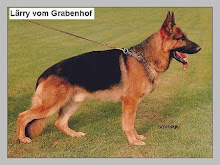
Welcome to the second part of training your dog to “pay attention”. Continue with the same protocol and after fifteen minutes, get down on one knee to your dog’s level and untie the long-line from his collar, but don’t remove the collar yet.
Just take a few moments to tell your dog what a great job he’s doing. Give him a good pet on the head and talk to him in enthusiastic tone of voice. A good praise and a pat on the dog's head are all you need at this time to help shape his attitude for the next lessons that will follow.
Time For A Break
When you have finished your few minutes of praise, casually remove the training collar and give your dog a little privacy to take a break and think things over. Do not leave the training collar on your dog when he’s unattended because the ring can snag objects and cause strangulation.
Your first fifteen minutes of training may have seemed unremarkable to you. However, if you followed the instructions accurately, your dog began to realize that when he’s tied to you, he must move with you. If he failed to learn that on your first day, you can be sure that he’ll learn it, and more, by the fourth day, since it takes the average dog four days to learn an average thing.
At the same time, your dog is going to learn something else that is equally important. He is going to learn that you have the ability to use sound judgment as well as demonstrating a will that’s much stronger than his. Confidence and respect in your actions will begin to grow.
Day 2
Your second day of training should be same as the first day, except for the direction of your pattern. From your starting point the pattern could be the reverse of the day before, so that your dog will not know ahead of time which direction you intend to take.
Depending on your particular dog, you may or may not have struggles on your second day. If you do, handle it as you did the first day. Ignore all distractions and just walk!
Day 3
On the third day of training, even the most stubborn and uncooperative dog will begin to realize that nothing he does is going to deter your from going in the direction you want to go, and when you want to go. He will also realize that the line of least resistance is to follow you.
You will also notice, as you repeat the procedures of the first two days, that your dog will be watching you just a bit more closely. He is learning that he must move with his owner when on a leash. He has learned that you won’t direct him of your intentions. And since he must move with you, there’s only one way he’ll be able to be aware of your movements, and that is to pay attention to you
Showing posts with label puppy training. Show all posts
Showing posts with label puppy training. Show all posts
Friday, September 11, 2009

Tuesday, March 31, 2009
Children & Puppies: Getting Your Child & New Puppy Off To A Great Start
Children & Puppies: Getting Your Child & New Puppy Off To A Great Start
Nothing is more adorable than seeing a small child and a loving puppy playing happily together. What's even better to know, is that psychological studies have proven that people who are fortunate enough to grow up with a dog in the family household tend to have happier childhoods.
Kids who grow up with a family dog learn respect for other creatures as well as caring for them. These kids learn empathy, sympathy, handling responsibilities. They also develop self-confidence and self-esteem by knowing they are contributing to taking care of a living creature.
You Must Help
These benefits and learning experiences between children and their pets do not occur automatically. It takes a responsible and patient adult to properly introduce the child to the new puppy and teach him/her how to properly interact with this new member of the family.
At the same time, the puppy needs to learn respect and obey the child the same way as he respects and obeys the other members of the household. This way, every member of the family can have a loving and healthy relationship.
The manner in which you approach your puppy and the experiences that you give him from his very first minute in the house will create a lasting impact throughout his entire life. From the first introduction, your child should learn the proper way to treat the puppy. Your child should realize that the puppy is a baby, and in many ways should be treated like one.
Avoiding Injuries To The Puppy & Your Child
Children around the age of 7 years and younger have the tendency to get excited when faced with new situations and experiences. This excitement may not be ideal when it comes to meeting a new puppy, or a dog of any age for that matter.
Excited behaviors such as making loud noises, chasing after the puppy, pulling at him, and other aggressive behaviors will result in the puppy getting scared.
In this situation, the puppy will more likely run away instead of letting the child pet him. A very young puppy will try to find his mom and hide under her, while a puppy around 12 weeks old will perceive these behaviors as either a threat or an aggressive play and will most likely react by nipping or jumping up.
The proper way of introducing your new pet to your child is through restraint and guidance. Your child should realize that the puppy is a baby and that your child should be gentle when handling him. To better teach your young ones how to be gentle, use a stuffed animal and teach her how to pet it properly. Practice this with your child for a few days before the puppy arrives home.
Nothing is more adorable than seeing a small child and a loving puppy playing happily together. What's even better to know, is that psychological studies have proven that people who are fortunate enough to grow up with a dog in the family household tend to have happier childhoods.
Kids who grow up with a family dog learn respect for other creatures as well as caring for them. These kids learn empathy, sympathy, handling responsibilities. They also develop self-confidence and self-esteem by knowing they are contributing to taking care of a living creature.
You Must Help
These benefits and learning experiences between children and their pets do not occur automatically. It takes a responsible and patient adult to properly introduce the child to the new puppy and teach him/her how to properly interact with this new member of the family.
At the same time, the puppy needs to learn respect and obey the child the same way as he respects and obeys the other members of the household. This way, every member of the family can have a loving and healthy relationship.
The manner in which you approach your puppy and the experiences that you give him from his very first minute in the house will create a lasting impact throughout his entire life. From the first introduction, your child should learn the proper way to treat the puppy. Your child should realize that the puppy is a baby, and in many ways should be treated like one.
Avoiding Injuries To The Puppy & Your Child
Children around the age of 7 years and younger have the tendency to get excited when faced with new situations and experiences. This excitement may not be ideal when it comes to meeting a new puppy, or a dog of any age for that matter.
Excited behaviors such as making loud noises, chasing after the puppy, pulling at him, and other aggressive behaviors will result in the puppy getting scared.
In this situation, the puppy will more likely run away instead of letting the child pet him. A very young puppy will try to find his mom and hide under her, while a puppy around 12 weeks old will perceive these behaviors as either a threat or an aggressive play and will most likely react by nipping or jumping up.
The proper way of introducing your new pet to your child is through restraint and guidance. Your child should realize that the puppy is a baby and that your child should be gentle when handling him. To better teach your young ones how to be gentle, use a stuffed animal and teach her how to pet it properly. Practice this with your child for a few days before the puppy arrives home.
Friday, February 27, 2009
New Puppy Shopping 1
New Puppy Shopping 1
“He always looks for me when he feels an attack coming on. His eyes glaze over, he starts panting, and then the convulsions begin. I just sit on the floor and pet him and sweet talk him. There is nothing that I can do but let him know I'm there and that I care about him.”
This is how Sandy, a long-time friend of mine, described an epileptic seizure of her 5 year-old Beagle. His seizures started when he was three and reoccur sporadically.
Sandy went on to tell me: “I've heard that sometimes a dog will have one or two seizures and never have another. But my dog has them so frequent now that I'm sure he'll always have this problem.”
Every year hundreds of puppy-buyers find themselves troubled with pets suffering from unsound health or poor temperament. It's easy enough to say that these dogs should be humanely destroyed. But how do you explain this decision to the children? It's even difficult for adults to adjust to the death of a beloved pet. Some people, like Sandy, may feel it worthwhile to keep a pet in spite of his problems.
So How Can One Avoid Buying Pets Like These In The First Place?
To start with, don't just buy the first cute puppy you see; a little investigation can really pay off in the long run. Breed clubs can be invaluable in helping you locate most of the reputable breeders in your area. Write to the A.K.C. For the name and address of the breed club secretary; then arrange by phone to visit any nearby kennels.
At the kennel, ask to see the sire and dam before even looking at the puppies. Although none of the obvious health problems will be apparent, you will be able to judge the dogs' personalities for yourself. If the parents are nervous, frightened, or overly aggressive, you will be better off looking somewhere else.
If the dogs slink away or are afraid to be touched, don't listen to excuses like, “Kennel dogs don't see many people, so it's normal behavior.” Or to justify the behavior of a dog that snaps, you might be told, “When Sparky was a puppy he had a bad experience and now he doesn't trust people anymore.”
All of this may be true, and told to you with real sincerity, however, it might be that the dog would have been mean or shy no matter what. You have no real way of knowing for sure, and the breeder doesn't either. It's better not to take a chance. If both parents are friendly, outgoing, and in good condition, the puppies will probably be the same.
“He always looks for me when he feels an attack coming on. His eyes glaze over, he starts panting, and then the convulsions begin. I just sit on the floor and pet him and sweet talk him. There is nothing that I can do but let him know I'm there and that I care about him.”
This is how Sandy, a long-time friend of mine, described an epileptic seizure of her 5 year-old Beagle. His seizures started when he was three and reoccur sporadically.
Sandy went on to tell me: “I've heard that sometimes a dog will have one or two seizures and never have another. But my dog has them so frequent now that I'm sure he'll always have this problem.”
Every year hundreds of puppy-buyers find themselves troubled with pets suffering from unsound health or poor temperament. It's easy enough to say that these dogs should be humanely destroyed. But how do you explain this decision to the children? It's even difficult for adults to adjust to the death of a beloved pet. Some people, like Sandy, may feel it worthwhile to keep a pet in spite of his problems.
So How Can One Avoid Buying Pets Like These In The First Place?
To start with, don't just buy the first cute puppy you see; a little investigation can really pay off in the long run. Breed clubs can be invaluable in helping you locate most of the reputable breeders in your area. Write to the A.K.C. For the name and address of the breed club secretary; then arrange by phone to visit any nearby kennels.
At the kennel, ask to see the sire and dam before even looking at the puppies. Although none of the obvious health problems will be apparent, you will be able to judge the dogs' personalities for yourself. If the parents are nervous, frightened, or overly aggressive, you will be better off looking somewhere else.
If the dogs slink away or are afraid to be touched, don't listen to excuses like, “Kennel dogs don't see many people, so it's normal behavior.” Or to justify the behavior of a dog that snaps, you might be told, “When Sparky was a puppy he had a bad experience and now he doesn't trust people anymore.”
All of this may be true, and told to you with real sincerity, however, it might be that the dog would have been mean or shy no matter what. You have no real way of knowing for sure, and the breeder doesn't either. It's better not to take a chance. If both parents are friendly, outgoing, and in good condition, the puppies will probably be the same.
Monday, February 9, 2009
House Training: Is Your Dog Refusing To Follow Your House Training Rules?
House Training: Is Your Dog Refusing To Follow Your House Training Rules?
Some dogs just absolutely refuse to become house trained. No matter how long and hard you have tried to implement techniques to get your dog to use the bathroom in the proper areas, he still chooses to be “vengeful” towards you by not following your instructions, right?
Wrong! The common misconception that your dog is trying to be vindictive and countermine your housetraining efforts by refusing to follow the rules is a complete myth.
Dogs only have the capacity for simple, direct emotions, such as being happy, sad, or scared. Their minds are not capable of plotting ways to seek revenge for that swat on his rear, or how you scolded him an hour ago.
Dogs do, however, remember and draw upon past experiences that they associate with current situations. But it is important to understand that these associations only create an emotion in which they will feel when going through a similar experience.
In other words, lets say that you punish your dog for urinating on the front porch. If you continue to scold him for this behavior then eventually your dog will become fearful of using the bathroom outside. All he knows is that he is “outside”, not on the front porch. Your efforts will countermine your housetraining goals.
For this reason alone, it is important never to punish or yell at your dog when he uses the bathroom inside the house. Most housetraining problems actually stem from owners who completely instill fear in their pets when they go potty on the floor. This creates enough trauma to completely halt all of your housetraining efforts.
The key is trying not to react. Instead, remove your dog from the room and take him outside in a very calm and relaxed manner. Be sure that he does not see you cleaning up his mess. Quietly clean the area and be sure to use an enzyme-containing house cleaner. Vinegar or liquid soap will do just fine as well. By completely removing all of the older, this helps reduce your dog's need to urinate and mark the same spot over and over.
Tip: Avoid using ammonia because the smell is very similar to that of a dog's urine and can stimulate him to pee in the same area.
When all else fails, schedule a visit with your veterinarian so that the doctor can do a complete health checkup of your dog to make sure that there is not a health-related reason for his inability to become house trained.
Some dogs can be harboring illnesses that may prove to be the cause of not having the ability to control their bowel movements. Such illnesses could be caused by ticks, such as Rocky Mountain Spotted Fever, or the most common reason: a urinary tract infection.
Some dogs just absolutely refuse to become house trained. No matter how long and hard you have tried to implement techniques to get your dog to use the bathroom in the proper areas, he still chooses to be “vengeful” towards you by not following your instructions, right?
Wrong! The common misconception that your dog is trying to be vindictive and countermine your housetraining efforts by refusing to follow the rules is a complete myth.
Dogs only have the capacity for simple, direct emotions, such as being happy, sad, or scared. Their minds are not capable of plotting ways to seek revenge for that swat on his rear, or how you scolded him an hour ago.
Dogs do, however, remember and draw upon past experiences that they associate with current situations. But it is important to understand that these associations only create an emotion in which they will feel when going through a similar experience.
In other words, lets say that you punish your dog for urinating on the front porch. If you continue to scold him for this behavior then eventually your dog will become fearful of using the bathroom outside. All he knows is that he is “outside”, not on the front porch. Your efforts will countermine your housetraining goals.
For this reason alone, it is important never to punish or yell at your dog when he uses the bathroom inside the house. Most housetraining problems actually stem from owners who completely instill fear in their pets when they go potty on the floor. This creates enough trauma to completely halt all of your housetraining efforts.
The key is trying not to react. Instead, remove your dog from the room and take him outside in a very calm and relaxed manner. Be sure that he does not see you cleaning up his mess. Quietly clean the area and be sure to use an enzyme-containing house cleaner. Vinegar or liquid soap will do just fine as well. By completely removing all of the older, this helps reduce your dog's need to urinate and mark the same spot over and over.
Tip: Avoid using ammonia because the smell is very similar to that of a dog's urine and can stimulate him to pee in the same area.
When all else fails, schedule a visit with your veterinarian so that the doctor can do a complete health checkup of your dog to make sure that there is not a health-related reason for his inability to become house trained.
Some dogs can be harboring illnesses that may prove to be the cause of not having the ability to control their bowel movements. Such illnesses could be caused by ticks, such as Rocky Mountain Spotted Fever, or the most common reason: a urinary tract infection.
Thursday, February 5, 2009
Dog Training – Why You Should Never Shout At Your Dog
Dog Training – Why You Should Never Shout At Your Dog
If you have a new puppy in the house and are unclear about whether or not you should use yelling as a way to get him to stop doing something wrong or barking too much, then this article should clear up your confusion. If anything, you should learn the simple fact that yelling at your dog it does nothing to fix a problem, stop what he's doing, or induce any type of positive reinforcement.
Yes your dog may stop doing a certain activity temporarily after yelling at him, but he will only return to whatever behavior he was displaying which made you angry in the first place. Why? Because when you shout at your dog it does nothing to fix the issue, yelling only works as a temporary solution.
Most puppies think of their owners as other dogs. And when you start yelling at your pet, it only increases how excited he is about the situation. You also cause your dog to create a negative association between yelling and how he feels around you. He will soon start to connect yelling with the idea that he is disliked or unwanted, and will not have the ability to know that he is actually breaking a rule that you are trying to establish.
Not All Loud Voice Commands Are Bad
Even though yelling at your dog is considered to be of poor communication skills, there are definitely times when you need to firm up the tone of your voice and change the way you come across to him. There are three general forms of communication in terms of the way you speak to your dog that you can apply:
1. The soothing tone of voice. A soothing and delightful tone of voice should be used whenever you want to give praise to your dog. When you communicate this way, you should be able to relax and soothe him as opposed to creating excitability. Speaking to your puppy in a soothing tone of voice makes him feel secure and proud knowing that you are happy with him.
2. The second tone of voice used when communicating with your dog is more of a direct tone. A direct tone would be the same way you give commands to your puppy when you want to get his attention. It should be short, firm, and authoritative.
3. The third general tone of voice you can use with your dog is more of a disciplinary tone. However, you must learn to draw a fine line between a disciplinary tone and a yelling tone. Remember, you do not want to yell your dog but there are certainly times when you need to get across to him to back away from something quickly or to stop doing something immediately, all without actually scaring him off with shouting. Personally, I like to use two syllables such as "DOWN BOY" or "SPARKY NO".
If you have a new puppy in the house and are unclear about whether or not you should use yelling as a way to get him to stop doing something wrong or barking too much, then this article should clear up your confusion. If anything, you should learn the simple fact that yelling at your dog it does nothing to fix a problem, stop what he's doing, or induce any type of positive reinforcement.
Yes your dog may stop doing a certain activity temporarily after yelling at him, but he will only return to whatever behavior he was displaying which made you angry in the first place. Why? Because when you shout at your dog it does nothing to fix the issue, yelling only works as a temporary solution.
Most puppies think of their owners as other dogs. And when you start yelling at your pet, it only increases how excited he is about the situation. You also cause your dog to create a negative association between yelling and how he feels around you. He will soon start to connect yelling with the idea that he is disliked or unwanted, and will not have the ability to know that he is actually breaking a rule that you are trying to establish.
Not All Loud Voice Commands Are Bad
Even though yelling at your dog is considered to be of poor communication skills, there are definitely times when you need to firm up the tone of your voice and change the way you come across to him. There are three general forms of communication in terms of the way you speak to your dog that you can apply:
1. The soothing tone of voice. A soothing and delightful tone of voice should be used whenever you want to give praise to your dog. When you communicate this way, you should be able to relax and soothe him as opposed to creating excitability. Speaking to your puppy in a soothing tone of voice makes him feel secure and proud knowing that you are happy with him.
2. The second tone of voice used when communicating with your dog is more of a direct tone. A direct tone would be the same way you give commands to your puppy when you want to get his attention. It should be short, firm, and authoritative.
3. The third general tone of voice you can use with your dog is more of a disciplinary tone. However, you must learn to draw a fine line between a disciplinary tone and a yelling tone. Remember, you do not want to yell your dog but there are certainly times when you need to get across to him to back away from something quickly or to stop doing something immediately, all without actually scaring him off with shouting. Personally, I like to use two syllables such as "DOWN BOY" or "SPARKY NO".
Tuesday, February 3, 2009
Dog Training – Use The Right Body Language So Your Dog Understands
Dog Training – Use The Right Body Language So Your Dog Understands
Dogs are highly intelligent creatures and many pet owners do not give them enough credit when it comes to the way they can read and understand our body language. Some people have no idea that the body language that we display has a major impact on how well a dog will listen to us and obey our commands. Using the correct form of body language can also quickly stop your dog from displaying an improper behavior.
Let's use a very common example, such as the overexcited dog who likes to jump on every guest that comes to your door. We all go through this with our puppy or adult dog at some point in time. As soon as the guests arrive your dog is overwhelmed with happiness and excitement about who is at the door and whether or not they are going to play with him.
Do they have dog treats? What do they smell like? Do they want to play? How about I just jump all over them and see? This is exactly what your dog is thinking if we were to decipher his emotional behavior.
And meanwhile, you are giving every command possible to get your dog to stop being so excited and jumping on everyone. You try shouting but it only makes him more excited. You try giving harsh and loud "Off" commands but it's not working. Eventually, you are so stressed with yelling and trying to pull your dog off that it turns into one big chaotic party.
And yes, the term "party" is a great way to explain it because to your dog you are just joining in on the fun and excitement that he is feeling. Can you see now how your body language and the way you are communicating with her voice comes across to your dog? You are only adding to the situation as opposed to changing our dog's behavior.
Communicate better with your dog by using the following body language tips
In the above example of the overexcited dog who can't seem to stop jumping all over the house guests, you understand now that your body language and excitability only made your dog feel more enthused about what it is he was doing. Therefore, you must take a different approach to the situation, regardless of what action you are trying to communicate with your dog. Below are a few basic body language tips that you can use:
1. When you're angry at your puppy or adult dog, do not chase him around the house. You may be upset with them, but to your puppy, he thinks you're playing a game and he will run around forever.
2. When you give your dog a command, display a very bold and upright body position. Stand up, chest forward, and head back. Your dog will have more respect and a slight bit of intimidation, which can help with training him.
3. If your dog is extremely excited then do not add to the problem by getting feisty. Instead, move slowly and talk in a soothing tone of voice. Display the same behavior you wish him to use. Doing so will calm him down and it will be much easier to change his behavior.
Dogs are highly intelligent creatures and many pet owners do not give them enough credit when it comes to the way they can read and understand our body language. Some people have no idea that the body language that we display has a major impact on how well a dog will listen to us and obey our commands. Using the correct form of body language can also quickly stop your dog from displaying an improper behavior.
Let's use a very common example, such as the overexcited dog who likes to jump on every guest that comes to your door. We all go through this with our puppy or adult dog at some point in time. As soon as the guests arrive your dog is overwhelmed with happiness and excitement about who is at the door and whether or not they are going to play with him.
Do they have dog treats? What do they smell like? Do they want to play? How about I just jump all over them and see? This is exactly what your dog is thinking if we were to decipher his emotional behavior.
And meanwhile, you are giving every command possible to get your dog to stop being so excited and jumping on everyone. You try shouting but it only makes him more excited. You try giving harsh and loud "Off" commands but it's not working. Eventually, you are so stressed with yelling and trying to pull your dog off that it turns into one big chaotic party.
And yes, the term "party" is a great way to explain it because to your dog you are just joining in on the fun and excitement that he is feeling. Can you see now how your body language and the way you are communicating with her voice comes across to your dog? You are only adding to the situation as opposed to changing our dog's behavior.
Communicate better with your dog by using the following body language tips
In the above example of the overexcited dog who can't seem to stop jumping all over the house guests, you understand now that your body language and excitability only made your dog feel more enthused about what it is he was doing. Therefore, you must take a different approach to the situation, regardless of what action you are trying to communicate with your dog. Below are a few basic body language tips that you can use:
1. When you're angry at your puppy or adult dog, do not chase him around the house. You may be upset with them, but to your puppy, he thinks you're playing a game and he will run around forever.
2. When you give your dog a command, display a very bold and upright body position. Stand up, chest forward, and head back. Your dog will have more respect and a slight bit of intimidation, which can help with training him.
3. If your dog is extremely excited then do not add to the problem by getting feisty. Instead, move slowly and talk in a soothing tone of voice. Display the same behavior you wish him to use. Doing so will calm him down and it will be much easier to change his behavior.
Monday, February 2, 2009
Dog Training:Teaching Your Dog The Basic Command of "Come Here"
Dog Training – Teaching Your Dog The Basic Command Of “Come Here”
Dog training does not have to be complicated, nor does it take enormous amounts of time to teach your pet the basics. Speaking of basics, we all want our dogs to come to us when called. There are many ways to go about this dog training procedure, below is perhaps the easiest way.
The following instructions will have your dog responding to your "come" command in no time. This easy technique revolves around luring your dog and then rewarding him. Please note that this will be a lot easier if your dog is hungry before beginning training. Also, have handy small dog treats that you will use as a training aid.
1. First stand in front of your dog and hold a dog treat in between your thumb and index finger so it can easily be seen. Your arm should be in front of you but resting on your leg.
2. Now simply get the atmosphere exciting to your dog by putting on a great big smile and with a sweet and fun tone of voice, say "Sparky, Come!" Do not overdo the come command with too much excitement, just enough to get him to notice you and realize that you are happy.
3. Your puppy should start running towards you, especially at the sight of the dog treat in your hand. Most dogs come running at the first hint of food, but your puppy may need a little more motivation. If after a moment he does not respond, your next move is to squat down and reach out with the treat just slightly, while calling his name again and getting the "come" command.
4. Once your puppy does arrive at the treat and in front of you, try to lure him into the sitting position by stroking his neck and upper back with one hand and applying pressure on his hind for him to sit, while slowly moving the treat to his mouth with your other hand. Now is the perfect time to start praising him in a loving voice and creating a positive feeling that he will want to experience again when you call his name and ask them to come to you.
5. Eventually drop the dog treats altogether and repeat the above steps, but offering praise instead of food when your dog comes to you.
Dog training does not have to be complicated, nor does it take enormous amounts of time to teach your pet the basics. Speaking of basics, we all want our dogs to come to us when called. There are many ways to go about this dog training procedure, below is perhaps the easiest way.
The following instructions will have your dog responding to your "come" command in no time. This easy technique revolves around luring your dog and then rewarding him. Please note that this will be a lot easier if your dog is hungry before beginning training. Also, have handy small dog treats that you will use as a training aid.
1. First stand in front of your dog and hold a dog treat in between your thumb and index finger so it can easily be seen. Your arm should be in front of you but resting on your leg.
2. Now simply get the atmosphere exciting to your dog by putting on a great big smile and with a sweet and fun tone of voice, say "Sparky, Come!" Do not overdo the come command with too much excitement, just enough to get him to notice you and realize that you are happy.
3. Your puppy should start running towards you, especially at the sight of the dog treat in your hand. Most dogs come running at the first hint of food, but your puppy may need a little more motivation. If after a moment he does not respond, your next move is to squat down and reach out with the treat just slightly, while calling his name again and getting the "come" command.
4. Once your puppy does arrive at the treat and in front of you, try to lure him into the sitting position by stroking his neck and upper back with one hand and applying pressure on his hind for him to sit, while slowly moving the treat to his mouth with your other hand. Now is the perfect time to start praising him in a loving voice and creating a positive feeling that he will want to experience again when you call his name and ask them to come to you.
5. Eventually drop the dog treats altogether and repeat the above steps, but offering praise instead of food when your dog comes to you.
Thursday, January 29, 2009
Dog Training: The Right Type Of Communication Needed For Dog Training Success
Dog Training: The Right Type Of Communication Needed For Dog Training Success
The most crucial factor that can spell the difference between success and failure in training your dog is attitude – both yours and your dog’s. While your family dog may have some pretty serious difficulties, your dog’s right attitude toward training will help overcome even his most intolerable behavior. However, control of your dog’s attitude rests entirely with you!
You need to mold your dog into the family member you want him to be – where obedience and instant response will allow a relationship for you and your pet that is free from stress and frustration.
This article will deal only with training dogs between six months of age and older. There is a difference in training techniques when teaching a dog below the age of six months, and that age group will require methods specifically intended for puppies.
Teaching a six-month-old dog with kindergarten methods would be an insult to his intelligence, much like a college student would be offended if his instructor talked to him using child-like teaching techniques. Similarly, a six-year-old child would achieve nothing sitting in a classroom listening to a professor explaining the theory of relativity.
Setting Positive Attitudes While Training Your Dog
If your dog’s training periods each day consist of nothing but commands, I can assure you that a negative attitude will develop from your pet. His daily routine is now being changed to include training sessions. It is up to you, his owner, to make these training periods something that your dog will enthusiastically look forward to.
You can achieve this simply by communicating verbally with the dog during training periods. Here lies another key that will spell the difference between mediocre and excellent performance from your dog. By communicating verbally doesn’t mean the usual “Heel” and “Sit” commands. Literally talk to your dog. Say something like “Good Boy….. You’re doing a great job… Come on boy, you can do it…etc.”
Although your dog has no idea what you are saying, two things are actually taking place while you’re talking to him. First, your enthusiastic and warm tone of voice reflects your positive attitude and motivates your dog into doing a great job in order to please you.
Second, this motivation then triggers a positive attitude in your dog. Commands, on the other hand, should be given in a completely different tone of voice. They should, in fact, sound like commands, and not requests. They are then followed by enthusiastic and loving praise as soon as the dog follows the command or when shown what his correct response should have been.
Keep in mind that the most important key to the success of your dog’s training is communication. Talk to him, reflect your positive attitude in the tone of your voice and your dog will reflect his positive attitude in the excited way he welcomes each day’s training session.
The most crucial factor that can spell the difference between success and failure in training your dog is attitude – both yours and your dog’s. While your family dog may have some pretty serious difficulties, your dog’s right attitude toward training will help overcome even his most intolerable behavior. However, control of your dog’s attitude rests entirely with you!
You need to mold your dog into the family member you want him to be – where obedience and instant response will allow a relationship for you and your pet that is free from stress and frustration.
This article will deal only with training dogs between six months of age and older. There is a difference in training techniques when teaching a dog below the age of six months, and that age group will require methods specifically intended for puppies.
Teaching a six-month-old dog with kindergarten methods would be an insult to his intelligence, much like a college student would be offended if his instructor talked to him using child-like teaching techniques. Similarly, a six-year-old child would achieve nothing sitting in a classroom listening to a professor explaining the theory of relativity.
Setting Positive Attitudes While Training Your Dog
If your dog’s training periods each day consist of nothing but commands, I can assure you that a negative attitude will develop from your pet. His daily routine is now being changed to include training sessions. It is up to you, his owner, to make these training periods something that your dog will enthusiastically look forward to.
You can achieve this simply by communicating verbally with the dog during training periods. Here lies another key that will spell the difference between mediocre and excellent performance from your dog. By communicating verbally doesn’t mean the usual “Heel” and “Sit” commands. Literally talk to your dog. Say something like “Good Boy….. You’re doing a great job… Come on boy, you can do it…etc.”
Although your dog has no idea what you are saying, two things are actually taking place while you’re talking to him. First, your enthusiastic and warm tone of voice reflects your positive attitude and motivates your dog into doing a great job in order to please you.
Second, this motivation then triggers a positive attitude in your dog. Commands, on the other hand, should be given in a completely different tone of voice. They should, in fact, sound like commands, and not requests. They are then followed by enthusiastic and loving praise as soon as the dog follows the command or when shown what his correct response should have been.
Keep in mind that the most important key to the success of your dog’s training is communication. Talk to him, reflect your positive attitude in the tone of your voice and your dog will reflect his positive attitude in the excited way he welcomes each day’s training session.
Wednesday, January 28, 2009
Dog Training:Getting Your Dogs Attention (3)
Dog Training: Getting Your Dog’s Attention (Part 3)
On the fourth day, as you repeat the procedures of the first three days, you’ll discover that there’s no more opposition and no games. This is simple enough, unless your dog happens to become momentarily distracted and forgetful.
And that is just exactly what you want to happen, so that he will learn to overcome momentary temptation and distraction and keep his attention focused on you. After all, obedience is needed particularly in time of emergency, and since you are going to build obedience as well as character into your dog, it is not too much to ask, that, at a time when other dogs would yield to distraction and temptation, your dog has his attention totally focused on you.
Your job from day four until your pet learns to ignore temptation is to use distraction and temptation during your fifteen-minute training sessions. The procedures will be nearly the same as the first three days, except that you will walk in the direction of the distraction or temptation and hope that your dog will rush recklessly toward it.
You will of course have chosen that precise moment to wish him goodbye on his journey, turn, and walk fast in the opposite direction. And, as you may expect, his journey will be short (fifteen to twenty feet) before he turns around and walks toward you. Your dog will not hate you for having to turn around because he won’t associate his abrupt change of direction with you at all.
What Your Dog Will Know For Sure
The last four days have shown him that you will move whenever you choose, and in whatever direction you choose without first checking to see if it’s alright with him. Your dog knew this. What happened was his fault because he took his attention and eyes off you for a moment and gave in to temptation. It was just “coincidental” that you decided to move, at that same moment, and in the direction opposite to that in which he was heading.
You know that the move wasn’t really a coincidence, but your dog doesn’t know this, and will never know. What he will come to realize is that when a distraction or temptation appears, that is the exact moment that you will choose to reverse your direction of travel.
If you do your work well for the next few days, your dog will come to consider every temptation or distraction as a reminder and a cue to keep his eyes and attention on you. Distractions and temptations include people and things such as a skateboarder, a strange cat, another dog, a rolling ball, or a plate of food.
The list can go on and on, depending on your dog’s personality. However, to have someone call your dog by name in an attempt to distract him must be considered unfair. You must stick to other situations and things.
In Conclusion
To conclude this part of training, remember to always walk briskly in a straight line, with confidence in your movement. If you hesitate or walk slow, your dog will not develop the necessary confidence. Never give your dog verbal commands when working with him on the long-line. You’re not teaching him to heel yet.
For now, you’re teaching him four things. First, when tied to a person, he must move with that person. Second, your determination, will, and status are such that you will walk anywhere and at any time without first checking to see if it’s alright with him. Third, in order for him to be aware of your movement, and in which direction you’ll be walking, he needs to pay attention to you because you won’t let him know in advance. Fourth, when distraction or temptation appears, they are not excuses to be inattentive. On the contrary, that is when he must be the more attentive and focused on you.
On the fourth day, as you repeat the procedures of the first three days, you’ll discover that there’s no more opposition and no games. This is simple enough, unless your dog happens to become momentarily distracted and forgetful.
And that is just exactly what you want to happen, so that he will learn to overcome momentary temptation and distraction and keep his attention focused on you. After all, obedience is needed particularly in time of emergency, and since you are going to build obedience as well as character into your dog, it is not too much to ask, that, at a time when other dogs would yield to distraction and temptation, your dog has his attention totally focused on you.
Your job from day four until your pet learns to ignore temptation is to use distraction and temptation during your fifteen-minute training sessions. The procedures will be nearly the same as the first three days, except that you will walk in the direction of the distraction or temptation and hope that your dog will rush recklessly toward it.
You will of course have chosen that precise moment to wish him goodbye on his journey, turn, and walk fast in the opposite direction. And, as you may expect, his journey will be short (fifteen to twenty feet) before he turns around and walks toward you. Your dog will not hate you for having to turn around because he won’t associate his abrupt change of direction with you at all.
What Your Dog Will Know For Sure
The last four days have shown him that you will move whenever you choose, and in whatever direction you choose without first checking to see if it’s alright with him. Your dog knew this. What happened was his fault because he took his attention and eyes off you for a moment and gave in to temptation. It was just “coincidental” that you decided to move, at that same moment, and in the direction opposite to that in which he was heading.
You know that the move wasn’t really a coincidence, but your dog doesn’t know this, and will never know. What he will come to realize is that when a distraction or temptation appears, that is the exact moment that you will choose to reverse your direction of travel.
If you do your work well for the next few days, your dog will come to consider every temptation or distraction as a reminder and a cue to keep his eyes and attention on you. Distractions and temptations include people and things such as a skateboarder, a strange cat, another dog, a rolling ball, or a plate of food.
The list can go on and on, depending on your dog’s personality. However, to have someone call your dog by name in an attempt to distract him must be considered unfair. You must stick to other situations and things.
In Conclusion
To conclude this part of training, remember to always walk briskly in a straight line, with confidence in your movement. If you hesitate or walk slow, your dog will not develop the necessary confidence. Never give your dog verbal commands when working with him on the long-line. You’re not teaching him to heel yet.
For now, you’re teaching him four things. First, when tied to a person, he must move with that person. Second, your determination, will, and status are such that you will walk anywhere and at any time without first checking to see if it’s alright with him. Third, in order for him to be aware of your movement, and in which direction you’ll be walking, he needs to pay attention to you because you won’t let him know in advance. Fourth, when distraction or temptation appears, they are not excuses to be inattentive. On the contrary, that is when he must be the more attentive and focused on you.
Subscribe to:
Posts (Atom)