
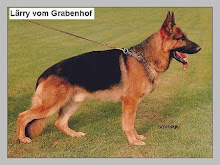
When you look down at your brand new, small and tender puppy peacefully sleeping in its little bed, it's hard to think that in just two to three months it may grow to be 40, 50, or even up to 100 pounds depending on the type of breed. And although its behaviors may cute at the moment, like jumping up and putting his front paws on your body, these actions will be far less enjoyable when your dog is all grown up and literally knocking you over.
Your best bet is to start training your puppy from day one so that he can learn proper manners as he grows into adulthood. Puppies that are not trained in this manner end up learning all of the wrong stuff and their owners wonder why they cannot seem to get their dogs to behave as they age.
Many years ago, when dog training methods used more punishment oriented (using harsh methods to train puppies), dog trainers typically required all puppy trainees to be at least six months old. The reason was partly due to the fact that such physical correction protocols used could not be done with dogs that were too small or too young.
What is ironic about dog training in the old days is that by the time most puppies are six months old they are big enough and mentally stubborn enough to ignore commands and are altogether tough to train.
New Times Bring Better Training Methods
Over the last 20 years or so, the dog training profession has embraced more friendly and loving training tactics for their puppy clients. Most trainers now except puppies that are as young as 8 to 10 weeks old. They are typically enrolled in socialization classes and puppy kindergarten.
Positive training is now used instead of the old-school methods of negative reinforcement. Puppies are taught to walk politely on the leash. They learn the basic commands of sit, stay, lie down, and come. In addition to these simple instructions, other useful techniques are learned by puppies such as how to relax, give and take their paw, and polite greeting.
Dog Owners Are More Involved With Training Nowadays
Another interesting aspect of raising dogs that has been noted over the last couple of decades is that more and more dog owners have taken it upon themselves to train their puppies.
This is partly due to the fact that so many dog training publications and manuals have been written. Modern dog training programs are based more and more on scientific principles and psychological studies of animal behavior and temperament.
Simple puppy training programs have taught dog owners to utilize techniques such as clicker training and luring.
Clicker training involves the use of a small mechanism that makes a clicking sound when pressed. When a dog hears the sound it will associate the click with whatever reward you give him. This tells the animal that something good is coming and he should repeat whatever behavior or action you have been teaching him.
Luring training is simply using food such as a dog treat, or even a toy, to induce the dog to display a specific behavior in order to follow the lure in hopes of getting the reward.
Tuesday, September 22, 2009

Tuesday, September 15, 2009
Dog Training: Getting Your Dog’s Attention (Part 3)
On the fourth day, as you repeat the procedures of the first three days, you’ll discover that there’s no more opposition and no games. This is simple enough, unless your dog happens to become momentarily distracted and forgetful.
And that is just exactly what you want to happen, so that he will learn to overcome momentary temptation and distraction and keep his attention focused on you. After all, obedience is needed particularly in time of emergency, and since you are going to build obedience as well as character into your dog, it is not too much to ask, that, at a time when other dogs would yield to distraction and temptation, your dog has his attention totally focused on you.
Your job from day four until your pet learns to ignore temptation is to use distraction and temptation during your fifteen-minute training sessions. The procedures will be nearly the same as the first three days, except that you will walk in the direction of the distraction or temptation and hope that your dog will rush recklessly toward it.
You will of course have chosen that precise moment to wish him goodbye on his journey, turn, and walk fast in the opposite direction. And, as you may expect, his journey will be short (fifteen to twenty feet) before he turns around and walks toward you. Your dog will not hate you for having to turn around because he won’t associate his abrupt change of direction with you at all.
What Your Dog Will Know For Sure
The last four days have shown him that you will move whenever you choose, and in whatever direction you choose without first checking to see if it’s alright with him. Your dog knew this. What happened was his fault because he took his attention and eyes off you for a moment and gave in to temptation. It was just “coincidental” that you decided to move, at that same moment, and in the direction opposite to that in which he was heading.
You know that the move wasn’t really a coincidence, but your dog doesn’t know this, and will never know. What he will come to realize is that when a distraction or temptation appears, that is the exact moment that you will choose to reverse your direction of travel.
If you do your work well for the next few days, your dog will come to consider every temptation or distraction as a reminder and a cue to keep his eyes and attention on you. Distractions and temptations include people and things such as a skateboarder, a strange cat, another dog, a rolling ball, or a plate of food.
The list can go on and on, depending on your dog’s personality. However, to have someone call your dog by name in an attempt to distract him must be considered unfair. You must stick to other situations and things.
In Conclusion
To conclude this part of training, remember to always walk briskly in a straight line, with confidence in your movement. If you hesitate or walk slow, your dog will not develop the necessary confidence. Never give your dog verbal commands when working with him on the long-line. You’re not teaching him to heel yet.
For now, you’re teaching him four things. First, when tied to a person, he must move with that person. Second, your determination, will, and status are such that you will walk anywhere and at any time without first checking to see if it’s alright with him. Third, in order for him to be aware of your movement, and in which direction you’ll be walking, he needs to pay attention to you because you won’t let him know in advance. Fourth, when distraction or temptation appears, they are not excuses to be inattentive. On the contrary, that is when he must be the more attentive and focused on you.
Friday, September 11, 2009
Dog Training: Getting Your Dog’s Attention (Part 2)
Welcome to the second part of training your dog to “pay attention”. Continue with the same protocol and after fifteen minutes, get down on one knee to your dog’s level and untie the long-line from his collar, but don’t remove the collar yet.
Just take a few moments to tell your dog what a great job he’s doing. Give him a good pet on the head and talk to him in enthusiastic tone of voice. A good praise and a pat on the dog's head are all you need at this time to help shape his attitude for the next lessons that will follow.
Time For A Break
When you have finished your few minutes of praise, casually remove the training collar and give your dog a little privacy to take a break and think things over. Do not leave the training collar on your dog when he’s unattended because the ring can snag objects and cause strangulation.
Your first fifteen minutes of training may have seemed unremarkable to you. However, if you followed the instructions accurately, your dog began to realize that when he’s tied to you, he must move with you. If he failed to learn that on your first day, you can be sure that he’ll learn it, and more, by the fourth day, since it takes the average dog four days to learn an average thing.
At the same time, your dog is going to learn something else that is equally important. He is going to learn that you have the ability to use sound judgment as well as demonstrating a will that’s much stronger than his. Confidence and respect in your actions will begin to grow.
Day 2
Your second day of training should be same as the first day, except for the direction of your pattern. From your starting point the pattern could be the reverse of the day before, so that your dog will not know ahead of time which direction you intend to take.
Depending on your particular dog, you may or may not have struggles on your second day. If you do, handle it as you did the first day. Ignore all distractions and just walk!
Day 3
On the third day of training, even the most stubborn and uncooperative dog will begin to realize that nothing he does is going to deter your from going in the direction you want to go, and when you want to go. He will also realize that the line of least resistance is to follow you.
You will also notice, as you repeat the procedures of the first two days, that your dog will be watching you just a bit more closely. He is learning that he must move with his owner when on a leash. He has learned that you won’t direct him of your intentions. And since he must move with you, there’s only one way he’ll be able to be aware of your movements, and that is to pay attention to you
Just take a few moments to tell your dog what a great job he’s doing. Give him a good pet on the head and talk to him in enthusiastic tone of voice. A good praise and a pat on the dog's head are all you need at this time to help shape his attitude for the next lessons that will follow.
Time For A Break
When you have finished your few minutes of praise, casually remove the training collar and give your dog a little privacy to take a break and think things over. Do not leave the training collar on your dog when he’s unattended because the ring can snag objects and cause strangulation.
Your first fifteen minutes of training may have seemed unremarkable to you. However, if you followed the instructions accurately, your dog began to realize that when he’s tied to you, he must move with you. If he failed to learn that on your first day, you can be sure that he’ll learn it, and more, by the fourth day, since it takes the average dog four days to learn an average thing.
At the same time, your dog is going to learn something else that is equally important. He is going to learn that you have the ability to use sound judgment as well as demonstrating a will that’s much stronger than his. Confidence and respect in your actions will begin to grow.
Day 2
Your second day of training should be same as the first day, except for the direction of your pattern. From your starting point the pattern could be the reverse of the day before, so that your dog will not know ahead of time which direction you intend to take.
Depending on your particular dog, you may or may not have struggles on your second day. If you do, handle it as you did the first day. Ignore all distractions and just walk!
Day 3
On the third day of training, even the most stubborn and uncooperative dog will begin to realize that nothing he does is going to deter your from going in the direction you want to go, and when you want to go. He will also realize that the line of least resistance is to follow you.
You will also notice, as you repeat the procedures of the first two days, that your dog will be watching you just a bit more closely. He is learning that he must move with his owner when on a leash. He has learned that you won’t direct him of your intentions. And since he must move with you, there’s only one way he’ll be able to be aware of your movements, and that is to pay attention to you
Wednesday, September 2, 2009
Dog Training: Getting Your Dog’s Attention (Part 1)
In today's article about the first week of training your dog, we are going to apply a basic method that was originated by Mr. William Koehler, a respected animal trainer. His first week's long-line method (slightly changed here) should be highly praised as one of the greatest innovations in canine training.
Regardless of how basic and unpromising these first-week steps may seem, follow them carefully and exactly, and you will have a more obedient dog, one that will learn easier and faster.
Let The Training Begin
On your first day of training, take your dog to the backyard, the sidewalk, or the park (only if it provides little to no distractions). Put the training collar on your dog, making sure that it’s fitted correctly. Tie one end of the long-line to the free ring. Holding the other end of the long-line in your hands, pick a spot at a distance of about thirty to forty-five feet. It could be a tin can, a fire hydrant, or a particular patch of grass. Walk fast in a straight line to that spot. Determine to let nothing stand in your way, especially your dog and his tricks.
If yours is the type of dog who has had no form of total control placed over him, you can bet there’ll be tricks. He may start wailing, which means that he would prefer to go in some other direction and you are not cooperating.
He might roll over on his back and place all four feet in the air trying to hook a claw in the sky, which means he doesn’t particularly want to walk with you because you’re not going to the direction he wants. He may even try to rest directly in front of you which simply means that you forgot to ask his permission to walk, and he’d prefer that you stand still until he’s make up his mind.
In training your dog, you need to keep one thing perfectly clear in mind so that it will also be clear in the mind of your dog: You are training your dog, not the other way around.
Regardless of his tricks, and with the end of the long-line held firmly in your hand, go to the destination that you’ve chosen. As Mr. Koehler expresses “Your dog will go with you if for no other reason than to be near you”.
That first sixty seconds of training (the time it takes you to walk thirty to forty-five feet) may indeed be a test of wills. It is crucial that your dog develop assurance that you will win this test of wills. He will develop this assurance if he knows that you will go from point A to point B without considering his resistance.
By the time you reach your predetermined location, the learning processes will have already been triggered within the mind of your dog, so simply stand there for about forty-five seconds to a minute. Look around and observe everything around you except your pet. Do not even look at him. Doing so just might possibly get you hopelessly entangled in an emotional struggle.
When your forty-five seconds to one minute is up, pick another spot at about the same distance and, without warning or tugging on the leash to get your dog’s attention, walk at a brisk pace right to it. Again, do not let your dog stand in your way. If you have to clear your throat or in some other way try to catch your dog’s attention before moving, then your dog is doing a great job of training you.
Don’t ask your dog’s permission to walk and just go! When you reached your spot, pause again for about forty-five seconds to observe your surroundings – but not your dog. Again, pick a location and, without any warning, walk to it at a brisk pace. Continue this process for the full fifteen-minute training session.
Regardless of how basic and unpromising these first-week steps may seem, follow them carefully and exactly, and you will have a more obedient dog, one that will learn easier and faster.
Let The Training Begin
On your first day of training, take your dog to the backyard, the sidewalk, or the park (only if it provides little to no distractions). Put the training collar on your dog, making sure that it’s fitted correctly. Tie one end of the long-line to the free ring. Holding the other end of the long-line in your hands, pick a spot at a distance of about thirty to forty-five feet. It could be a tin can, a fire hydrant, or a particular patch of grass. Walk fast in a straight line to that spot. Determine to let nothing stand in your way, especially your dog and his tricks.
If yours is the type of dog who has had no form of total control placed over him, you can bet there’ll be tricks. He may start wailing, which means that he would prefer to go in some other direction and you are not cooperating.
He might roll over on his back and place all four feet in the air trying to hook a claw in the sky, which means he doesn’t particularly want to walk with you because you’re not going to the direction he wants. He may even try to rest directly in front of you which simply means that you forgot to ask his permission to walk, and he’d prefer that you stand still until he’s make up his mind.
In training your dog, you need to keep one thing perfectly clear in mind so that it will also be clear in the mind of your dog: You are training your dog, not the other way around.
Regardless of his tricks, and with the end of the long-line held firmly in your hand, go to the destination that you’ve chosen. As Mr. Koehler expresses “Your dog will go with you if for no other reason than to be near you”.
That first sixty seconds of training (the time it takes you to walk thirty to forty-five feet) may indeed be a test of wills. It is crucial that your dog develop assurance that you will win this test of wills. He will develop this assurance if he knows that you will go from point A to point B without considering his resistance.
By the time you reach your predetermined location, the learning processes will have already been triggered within the mind of your dog, so simply stand there for about forty-five seconds to a minute. Look around and observe everything around you except your pet. Do not even look at him. Doing so just might possibly get you hopelessly entangled in an emotional struggle.
When your forty-five seconds to one minute is up, pick another spot at about the same distance and, without warning or tugging on the leash to get your dog’s attention, walk at a brisk pace right to it. Again, do not let your dog stand in your way. If you have to clear your throat or in some other way try to catch your dog’s attention before moving, then your dog is doing a great job of training you.
Don’t ask your dog’s permission to walk and just go! When you reached your spot, pause again for about forty-five seconds to observe your surroundings – but not your dog. Again, pick a location and, without any warning, walk to it at a brisk pace. Continue this process for the full fifteen-minute training session.
Tuesday, September 1, 2009
Predicting Temperament (Part 2)
A good rule of thumb for predicting temperament is to take a look at the mother, and if possible, the father of a litter. Having ruled out that factor, you can draw on the research which has been done by the experts.
Just recently there was an article which described methods of selecting puppies for guide dogs for the blind. The tests used proved to be almost 95% accurate! And you don't have to be one of the experts to try the simple tests.
How You Can Easily Select A Puppy With The Best Temperament Of The Litter
When observing a puppy away from its mother and littermates, testers look for the following:
1. The puppy should move at ease in its pen.
2. He should move freely and look calmly from its pen at the tester, and any other situations.
3. It should be friendly and respond to the tester's encouragement.
4. It should not be upset by strange people, places, or things.
5. The pup should persevere in any project it undertakes.
6. It should also be willing to do what the tester wants, and show pleasure while doing it.
Bad qualities are revealed in the opposites of the above list: the puppy is nervous in new situations, refuses to move from where it is placed. It is indifferent to new situations and people and unfriendly with the tester. Its responses are not dependable; it acts one way one time and another way another time, in the same situation. It quits trying after one or two attempts at something. And if it is upset by strangers, the puppy is obstinate or refuses to do with the tester wants.
Maintaining A Good Temperament Throughout Your Dog's Life
Research is placing more and more emphasis on the early weeks and months of a dog's life. Trainers are beginning to work with dogs at earlier ages than they did formally. Research also indicates that a dog's temperament is not just a matter of “good” or “bad”, it probably varies along a continuum, as does humans, and as a result of many variables. A dog with one or two neurotic traits may be unsatisfactory.
Once you have chosen a dog with a good temperament, make sure you don't ruin him by poor handling. It helps if you can give him some obedience training. There are books to help you with this job, online dog training DVDs you can order, as well as local obedience classes that offer one-on-one instruction. Even if your dog never achieves any degree as a companion dog, the experience will help you in your handling of him and particularly in disciplining him.
Final Tip: Unless you happen to be an expert on training, don't try to make your family pet into an attack dog. You don't need an aggressive dog to scare off burglars. They tend to pass up houses with any sort of dog on the premises. Most dogs, even the gentlest, are protective when the need arises. And do not let your children encourage aggressiveness with too much rough play. Sometimes it gets out of hand and a dog will bite out of innocent excitement.
Just recently there was an article which described methods of selecting puppies for guide dogs for the blind. The tests used proved to be almost 95% accurate! And you don't have to be one of the experts to try the simple tests.
How You Can Easily Select A Puppy With The Best Temperament Of The Litter
When observing a puppy away from its mother and littermates, testers look for the following:
1. The puppy should move at ease in its pen.
2. He should move freely and look calmly from its pen at the tester, and any other situations.
3. It should be friendly and respond to the tester's encouragement.
4. It should not be upset by strange people, places, or things.
5. The pup should persevere in any project it undertakes.
6. It should also be willing to do what the tester wants, and show pleasure while doing it.
Bad qualities are revealed in the opposites of the above list: the puppy is nervous in new situations, refuses to move from where it is placed. It is indifferent to new situations and people and unfriendly with the tester. Its responses are not dependable; it acts one way one time and another way another time, in the same situation. It quits trying after one or two attempts at something. And if it is upset by strangers, the puppy is obstinate or refuses to do with the tester wants.
Maintaining A Good Temperament Throughout Your Dog's Life
Research is placing more and more emphasis on the early weeks and months of a dog's life. Trainers are beginning to work with dogs at earlier ages than they did formally. Research also indicates that a dog's temperament is not just a matter of “good” or “bad”, it probably varies along a continuum, as does humans, and as a result of many variables. A dog with one or two neurotic traits may be unsatisfactory.
Once you have chosen a dog with a good temperament, make sure you don't ruin him by poor handling. It helps if you can give him some obedience training. There are books to help you with this job, online dog training DVDs you can order, as well as local obedience classes that offer one-on-one instruction. Even if your dog never achieves any degree as a companion dog, the experience will help you in your handling of him and particularly in disciplining him.
Final Tip: Unless you happen to be an expert on training, don't try to make your family pet into an attack dog. You don't need an aggressive dog to scare off burglars. They tend to pass up houses with any sort of dog on the premises. Most dogs, even the gentlest, are protective when the need arises. And do not let your children encourage aggressiveness with too much rough play. Sometimes it gets out of hand and a dog will bite out of innocent excitement.
Predicting Temperament (Part 1)

Nobody wants a dog with a bad disposition. It's not much fun to own a dog which is not people-oriented either. Out of sentiment, people will keep unsatisfactory dogs because they cannot bring themselves to part with them. Others pass such dogs around, and as they go from home to home, dispositions get worse, and loyalties further confused.
The best hope for any prospective dog owner is the prevention of trouble by choosing the right dog. We assume that this prospective owner has already realized that he is taking on a living creature for what may be a decade or more of his life, and he will spend thousands of dollars on food and care, and that he will be liable under the law for any damage this animal does to humans or to property.
People often ask if it is not unfair to a dog to keep him in the city, in small quarters, confined to a leash outside, or left in the house while the owner goes to work. But in reality, the most unfair thing that you can do to a dog is to take him on when you're not prepared to keep him for a lifetime, and to face up to all of the inconveniences that will go along with owning a dog.
Where Does A Bad Temperament Come From?
We know that dogs tend to inherit the temperament of their parents. We also know that there are certain inbred characteristics affecting temperament which are the result of the selective breeding that has produced a group of purebred dogs.
The early environment of the newborn puppy, particularly in the critical weeks when he's looking away from his mother and his siblings to the humans around him, can provide a healthy period of socialization. On the other hand, this critical period can also be the spark which starts illness, an accident, or psychic trauma that can affect the puppy's temperament in a very negative way. In addition, you, his new owner, can be a bad influence on what might have started out as a pleasant dog.
Most Dog Buyers Are Not Educated Enough To Properly Choose A Dog
The average dog buyer is looking for a companion for the family, particularly for the children. Unfortunately, most people do not know what to look for when it comes to temperament. And the temperament of a dog is the number one overriding vital consideration in choosing one. A nervous dog makes an unsatisfactory companion for children under almost any circumstances, and one that is moody is potentially dangerous.
Some people prefer dogs of mixed breeding and assume that they will always have more stable temperaments. This is not true. There was a tragic attack a few years back where a mixed Chow-Spitz killed a young child. The dog had been passed on to the family after having a history of killing small animals and giving other indications of poor temperament. This alone should make you think twice about taking on a dog which has not worked out in someone else's family.
Friday, August 28, 2009
Destructive Chewing: Your Dog Is Trying To Say Something!
For many centuries now, humans have totally domesticated dogs. We have brought them into our society and, in most cases, expected them to act like us and to be a regular part of our families. We should accept that fact that, in doing so, we have caused some of our own human emotions to develop in our dogs. Dogs have learned to become jealous, neurotic, spiteful, hateful, and bored.
In adolescent dogs, between the ages of six to sixteen months, we find that these emotions cannot be controlled as easily as the same emotions in adult dogs. The same can be expressed by a human teenager’s capability of exercising mature restraint when affected by the same emotions.
Can You Spare 15 Minutes?
The most common cause of chronic chewing is boredom, and if every dog owner would spend a little more time each day giving his full attention and love to his pet, much of the “boredom chewing” can be eliminated. Fifteen minutes a day is all it takes, it’s just that easy!
The Spiteful Boxer
Spite, another motivating factor, should also be considered. A story about a twenty-month old Boxer would be a great example in this case. Ever since he was a puppy, this Boxer had been an “only child” to a couple who spoiled him with lots of love and attention. The dog went along with them shopping, running errands, and visiting friends. He would walk gracefully and loved tagging along with his parents.
Then, a new baby had arrived and things changed. Suddenly, the dog found himself left in the car during errand trips. On one occasion, mom and dad returned to the car only to find the entire interior completely destroyed! The car seats, the padded dashboard, the upholstery, all ripped to shreds, totally obliterated.
The Boxer dog was venting his wrath the only way he knew how. This is a case of spiteful chewing, not jealousy. The canine was not jealous of the new baby in the family, but he was not willing to give up his former position in the family and go back to just being a dog.
Replace The Dog's Target
The next time you catch your dog or puppy chewing a sock, shoe, or other object that he’s not supposed to, take the object away from him, followed by a firm “No!” The object should be replaced with his own chew toy. The toy will take his mind off the object that he was chewing and won’t make him think that you are taking something away from him.
And should your life suddenly change, while altering your dog's life in addition (like having a new baby in the house), like the Boxer up above, be sure to pay attention to the new schedule and adjust your focus to avoid your dog's destructive chewing. Your pet will need a little extra care and training to prevent such behavior and to settle in with the new changes.
In adolescent dogs, between the ages of six to sixteen months, we find that these emotions cannot be controlled as easily as the same emotions in adult dogs. The same can be expressed by a human teenager’s capability of exercising mature restraint when affected by the same emotions.
Can You Spare 15 Minutes?
The most common cause of chronic chewing is boredom, and if every dog owner would spend a little more time each day giving his full attention and love to his pet, much of the “boredom chewing” can be eliminated. Fifteen minutes a day is all it takes, it’s just that easy!
The Spiteful Boxer
Spite, another motivating factor, should also be considered. A story about a twenty-month old Boxer would be a great example in this case. Ever since he was a puppy, this Boxer had been an “only child” to a couple who spoiled him with lots of love and attention. The dog went along with them shopping, running errands, and visiting friends. He would walk gracefully and loved tagging along with his parents.
Then, a new baby had arrived and things changed. Suddenly, the dog found himself left in the car during errand trips. On one occasion, mom and dad returned to the car only to find the entire interior completely destroyed! The car seats, the padded dashboard, the upholstery, all ripped to shreds, totally obliterated.
The Boxer dog was venting his wrath the only way he knew how. This is a case of spiteful chewing, not jealousy. The canine was not jealous of the new baby in the family, but he was not willing to give up his former position in the family and go back to just being a dog.
Replace The Dog's Target
The next time you catch your dog or puppy chewing a sock, shoe, or other object that he’s not supposed to, take the object away from him, followed by a firm “No!” The object should be replaced with his own chew toy. The toy will take his mind off the object that he was chewing and won’t make him think that you are taking something away from him.
And should your life suddenly change, while altering your dog's life in addition (like having a new baby in the house), like the Boxer up above, be sure to pay attention to the new schedule and adjust your focus to avoid your dog's destructive chewing. Your pet will need a little extra care and training to prevent such behavior and to settle in with the new changes.
Subscribe to:
Posts (Atom)